OPINIONWhen a bus becomes a policy problem
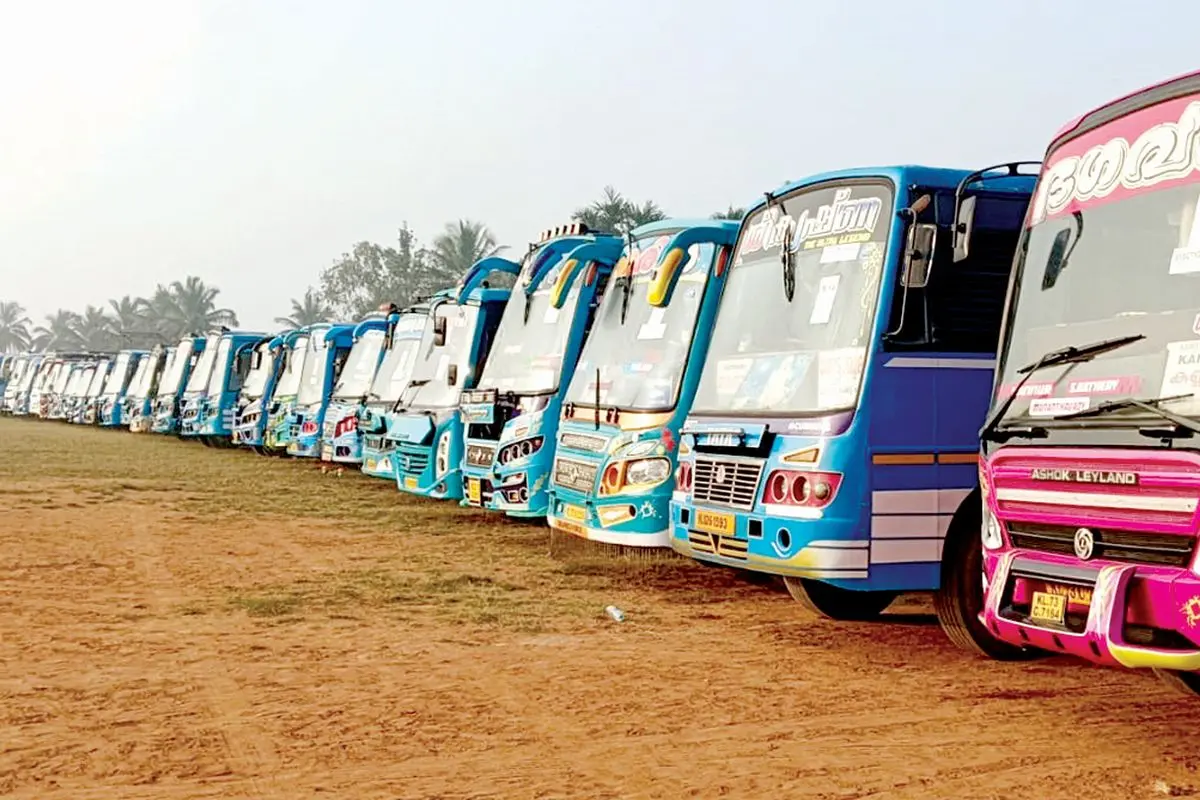
Kerala's bus network is in structural decline. The availability of bus services in the state fell from one bus for every 910 people in 2000 to one for every 2,807 people in 2023 (CPPR, 2026). Over the same period, private vehicle ownership rose sharply, with the state now recording nearly 425 vehicles per 1,000 people, among the highest in India.
What looks like a lifestyle choice is, in significant measure, a rational response to a failing public transport system.
Against this backdrop, the controversy surrounding private bus operators utilising the All India Tourist Permit (AITP) for passenger services is more than a localised regulatory dispute. It is a symptom of a deeper legislative mismatch between how Indian law categorises passenger transport and how people actually need to move.
A Law Built for Another Era
The Motor Vehicles Act, 1988, established two primary permit categories for passenger services: stage carriage permits, for route-based buses collecting fares by distance, and contract carriage permits, for vehicles hired by a person or group to travel to a single destination. This was the era when inter-state travel was limited and intercity mobility was relatively uncomplicated.
Decades later, neither category fits comfortably with modern travel behaviour. Passengers today expect seat reservations even for shorter intercity routes. App-based ticketing systems (now standard for intercity and interstate services) involve individual passenger contracting that the original definition of contract carriage did not anticipate.
Stage carriage permits do not accommodate reservation-based boarding. Contract carriage permits, meanwhile, prohibit picking up passengers from intermediate points -- precisely what demand -- responsive, intercity services often need to do.
The result: any operator wishing to offer a flexible, bookable intercity service has no clearly appropriate legal home.
What AITP Was Meant to Solve, and Didn't, Fully
The All India Tourist Vehicles (Permit) Rules, 2023, introduced the AITP framework as a partial solution. Designed under the 'One Nation, One Permit' approach, AITP allows tourist vehicles to operate across India on a single permit and consolidated fee. It offered greater operational flexibility than a standard contract carriage permit -- a significant step towards accommodating modern mobility needs.
However, AITP is defined in the AITV(P) rules by reference to Section 2(43) of the Motor Vehicles Act, which defines a tourist vehicle simply as a contract carriage constructed or adapted for tourist use. The MV Act itself contains no independent definition of AITP and, critically, no definition of who qualifies as a 'tourist'. The absence of this definition has created an interpretive grey zone: any intercity passenger who pre-books a ticket could arguably meet the threshold, allowing AITP vehicles to function, in practice, like stage carriage services.
Transport officials in Kerala raised concerns that private buses under AITP were operating as stage carriers by running regular daily trips on specified routes, displaying destination boards, and determining fares based on distance travelled.
The "Robin vs State of Kerala" case crystallised this ambiguity. Authorities intercepted the bus multiple times, and Tamil Nadu's MVD collected over ₹65,000 in road tax and fines for permit violations. Yet the legal question of whether Robin's operations constituted a genuine violation or an exploitation of regulatory ambiguity remains contested.
The 2026 amendment to the AITP rules now explicitly prohibits AITP vehicles from operating as stage carriages -- an acknowledgment, in effect, that the earlier rules had left that question open.
The Tax Burden Problem
A separate but related grievance compounds the situation. States like Kerala and Tamil Nadu challenged the central AITP tax-sharing framework in court, arguing that transport taxation is a state subject. The result has been that AITP operators were taxed under state motor vehicle taxation laws, leaving them carrying a heavier compliance burden than either KSRTC or private stage carriage operators.
Evidence from operational cost data (CPPR, 2026) indicates that the combined cost per kilometre for tax, insurance, and permits is approximately ₹0.02 for KSRTC, ₹1.88 for private stage-carriage vehicles, and ₹2.26 for AITP operators -- a disparity that is especially inequitable given that AITP interstate vehicles cover multiple states, not just Kerala's roads.
The additional burden has incentivised operators to register vehicles in states with lower tax rates, including Nagaland, Odisha, and Karnataka, depriving Kerala of revenue.
What the Budget Gets Right
The Kerala Revised Budget 2026–27 has proposed a 50 per cent reduction in quarterly taxes on AITP buses, bringing the per-seat rate down from ₹2,000 to ₹900 and the sleeper berth rate from ₹3,000 to ₹1,500. This is a pragmatic and overdue correction.
It acknowledges that punitive taxation was producing adverse outcomes: offshore registration, reduced investment, and constrained service availability rather than better-regulated roads.
A further reform worth exploring is a tiered tax model: a nominal home-state charge paired with a per-kilometre levy distributed proportionally across states where the vehicle actually operates.
This would align the tax burden with actual road use, reducing the inequity that currently disadvantages interstate operators.
The Wider Reform Opportunity
The AITP controversy points to a regulatory architecture that has not kept pace with how people move. The immediate need is legislative clarity: the Motor Vehicles Act should incorporate a statutory definition of AITP, along with a workable definition of 'tourist' that distinguishes legitimate intercity mobility services from stage carriage operations.
Individual passenger contracting (the commercial basis of app-based ticketing) also deserves explicit recognition within the contract carriage framework.
At the state level, Kerala has an opportunity to go further. A comprehensive All-Kerala bus permit regime covering intercity services, demand-responsive services, and premium services could provide the regulatory framework that neither AITP nor existing permit categories offer.
Such a framework would open the sector beyond its current nationalised structure, create space for private investment, and, most importantly, give passengers more options.
The Robin bus became a flashpoint because it identified a genuine gap between law and demand. The right response is not tighter enforcement of outdated categories but a regulatory framework built for the mobility needs of this decade.
The author is Senior Research Associate with the Centre for Public Policy Research. Views expressed are personal.