Why leaders hate media?
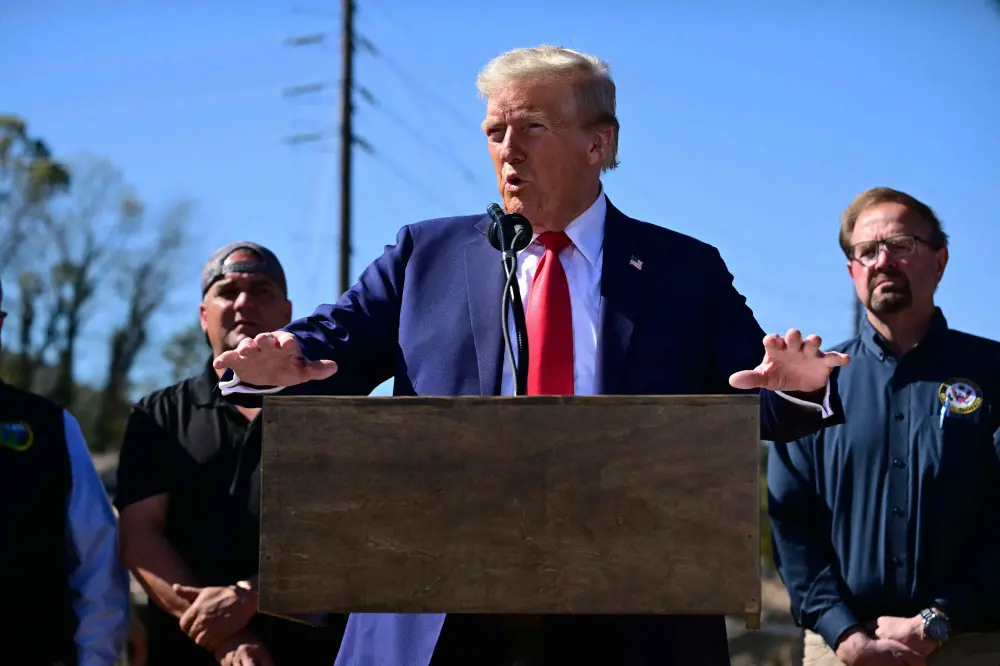
What is common to Donald Trump, Narendra Modi and Pinarayi Vijayan? The answers may vary depending on one's perspective. Yet, there could be unanimity on the threesome’s one common trait: their sheer contempt for the mainstream media. Though Modi has not overtly expressed this feeling, probably because most of India’s mainstream media has been his loyal lapdogs, the other two never let go of any opportunity to lambast them. Notwithstanding their mutually warring ideologies, both Trump and Pinarayi see the mainstream media as an “enemy of the people”. Though Modi has been cautious with his words, “presstitutes” is the most BJP leaders’ favourite appellation for the media.
Though Pinarayi has been exceptionally hostile to the media, it is also fundamentally rooted in the Communists’ ideological scepticism towards the “bourgeois media”. Interestingly, while Pinarayi and the other Communists see the mainstream media as a right wing lackey, Trump calls it the “left wing censorship regime”! However, when showering abuse on the media, Pinarayi can't hold a candle to the Potus-elect. If the Malayali Marxist has only once shouted at the media to get out of his meeting, the Republican leader has verbally “insulted, attacked or threatened” the media 108 times between September and October alone, according to a study. The world sees even more “democratic despots” joining this media -haters’ league.
What makes these leaders afford to ignore the mainstream media (MSM) which was once known capable of making or marring political careers? Why have Trump and Modi chosen to hate the media unlike their fellow “democrats” who are always beholden to it ? Simple. More than anything about these leaders, it has got to do with the changed media landscape. The contemporary MSM has been reduced to insignificance compared to the past. The last two decades, which saw social media’s phenomenal rise fuelled by the game-changing information technology, marked the eclipse of the “legacy media,” which consists of print and television. The steep fall in circulation and viewership of the legacy media has been paralleled with the rise of social media organs like Facebook, YouTube, Instagram, or TikTok as the primary sources of information and news worldwide, including in India, especially among the young. This fall is not just in terms of circulation, viewership, advertisement revenue, etc., but the MSM has also lost out on its traditional lead roles in opinion-making and agenda-setting. Adding to the MSM’s woes is the unprecedented trust deficit it suffers across the world from the public caused by its race to the bottom to survive the competition from social media.
The astonishing electoral victory of Donald Trump as the 47th President of the USA has officially confirmed the death of the MSM. Not only did it collectively fail to foresee the Trump wave, but the American public in large numbers did not care a damn about the dire warnings (entirely appropriate, too) it raised as to how unsuitable the Republican was to occupy the highest chair in the world’s largest democracy. The MSM gave Trump 85% negative coverage, while his contender Kamala Harris won 78% positive coverage. The media appears to have totally missed to see the pervasive racism and misogyny that prevailed in American society which also substantially led to Kamala Harris’ debacle. Why blame only India for sectarian considerations of caste and religion overshadowing politics!
Though the decline of the MSM has a much longer history, Trump’s triumphant march appears to have sealed its fate completely. Despite the fast dwindling readership and viewerships, mega political and sports events like presidential elections, debates or the Superbowl used to spike MSM’s readers and viewers. However, the latest election also marked its end as social media vanquished the entire MSM, consisting of celebrated mastheads like the Washington Post, the New York Times, and TV networks like CNN, CBS or NBC. Trump, as usual, ignored the entire MSM and also professional journalists during his election but cherry-picked podcasts by popular influencers to grant interviews. His decision was proved correct as his record three-hour-long chat with America’s top podcaster and comedian, Joe Rogan, attracted a whopping 45 million viewers on YouTube and 25 million listeners on Spotify. This was more than what a dozen MSM organisations collectively garnered! There were also some other influencers whom Trump favoured who were also no professional journalists. This time Trump became the first American presidential candidate to refuse appearing in America’s most watched and oldest news programme, CBS News’s 60 Minutes.
Moreover, the president-elect has even pledged to sue CBS for its interview with Kamala Harris on 60 Minutes. No wonder Trump is called the first Podcast President! He also had the bonus of having mega-billionaire Elon Musk, who owns the X, as his top campaigner. Harris also used social media for her campaign, with her presence mostly on TikTok.
In contrast to social media platforms, all three top American cable networks suffered a substantial drop in ratings on election night compared to 2020, when COVID-19 too had kept people confined to their homes. Newspapers have been suffering a steep decline in readership for a long time, which was offset to some extent after major players like the Washington Post and the New York Times launching their websites. However, even the traffic towards the media websites fell heavily after Facebook and Google recently stopped referring to them.
Following Trump’s win, critics, especially from the right wing, have been busy writing the obituary of the mass media. Columnist S A McCarthy’s piece, titled “Here Lies the Mainstream Media”, reminiscent of a tombstone inscription, said, “The mainstream media is dead. You watched it die Tuesday night”. He wrote that the time was over when “legacy media outfits shaped the political narrative, gatekept the flow of information, silenced and discredited dissenters, and kept a brutal chokehold on public discourse.”
So, what does this universal trend mean to the survival of MSM, which has evolved as a Siamese twin of democracy? History shows that neither of the two can exist without the other. Certainly, social media, despite its many positive aspects, cannot take over the MSM’s place as the fourth pillar of democracy. For, social media inherently respects no law or convention required for the functioning of a healthy democratic system. It is a free-for-all world where anyone can spread anything against anyone, unrestrained by the right to privacy or safeguards against defamation. Social media, which once triggered democratic upsurges even in societies that have been reeling for decades under authoritarian regimes, today provides the biggest platform for fake news, hate campaigns, unabashed racism, misogyny or caste and communal bigotry. Credited during its “age of innocence” to have ended the corporate monopoly in the media world, today’s social media is even more hegemonised by corporate behemoths like Elon Musk and Mark Zuckerberg.
Given their unhidden mutual hostility, Pinarayi Vijayan is likely to relish the mainstream media's growing insignificance with the next assembly election just 18 months away. Notwithstanding the delusions of grandeur felt by the exalted special correspondents, hotshot anchors and expert panelists of the mainstream media, most people are unconcerned with what they write or say even in a media savvy society like Kerala except for an ageing cohort which follows them. But can Pinarayi and the Left Democratic Front capitalise from the general apathy towards the media? They could have if they had astute social media influencers in their camp like Dhruv Rathi or Ravish Kumar (who caused BJP’s setback in the last election). Instead what they have now are the counterproductive Porali Shajis and their abusive troll army.