Srivastava to Ajith Kumar: When history repeats
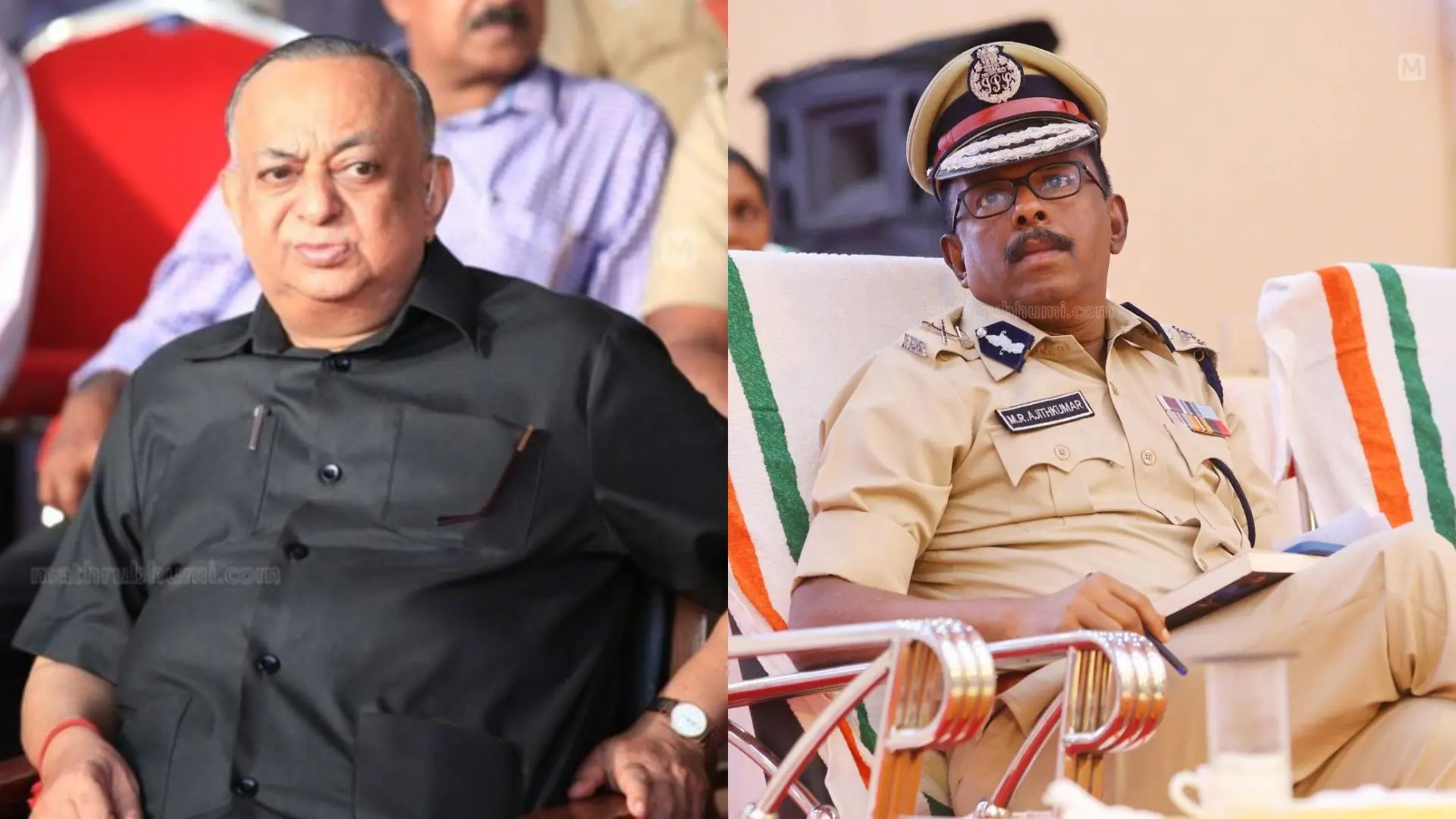
“History repeats itself, first as tragedy and then as farce” is one of Marx’s most quoted lines. In some ways, Chief Minister Pinarayi Vijayan’s alleged protection of his Political Secretary P Sasi and MR Ajith Kumar, the Additional Director General of Police (ADGP), even after the grave charges levelled against them, resembles the one that ravaged the K Karunakaran government of 1991-95.
The sensational espionage case centred on the Indian Space Research Organisation (ISRO) in Thiruvananthapuram that broke out in 1994, though subsequently found null and void, had led to a factional revolt within the ruling Congress and the United Democratic Front (UDF) that ended Chief Minister Karunakaran’s reign. Though the revolt by the AK Antony faction was triggered by their hostility to Karunakaran, who had been bulldozing them, the core of the clash was the nexus between the Chief Minister and Inspector General of Police Raman Srivastava, who was allegedly involved in the spy case. Srivastava was a critical figure in Karunakaran’s police coterie, helping in the Chief Minister's various political and personal operations. Grabbing the opportunity, Antony group leaders like Oommen Chandy whipped up a feverish campaign accusing Karunakaran of shielding Srivastava in the spy case, which rocked the country with the media portraying it as a diabolical anti-national conspiracy. As public opinion gradually turned against Karunakaran, UDF’s major constituents, the Muslim League and Kerala Congress (Mani), joined the revolt. In March 1995, Prime Minister PV Narasimha Rao replaced his close ally, Karunakaran, with AK Antony, who was in Delhi and flew down to Thiruvananthapuram in Rajhans, a special Air Force flight to take over as the new Chief Minister.
Though the case was later proved wrong and political rivalries had inflamed it, Karunakaran’s authoritarian and nepotistic ways could be arrested by the internal forces within the Congress and the UDF, which was an exercise in democratic correction.
The present allegations against Ajith Kumar and Sasi are also yet unproven. Though raised by PV Anwar, a ruling party MLA, the scandal has been amplified by UDF’s political hostility to the Chief Minister. Yet, its underlying triggers are undeniable, like the Chief Minister’s authoritarian style and his close association with the ADGP and his Political Secretary.
Undeniable is also the grave nature of the charges levelled against two of the most critical players in the government. Though the Director General of Police, the state's highest police official, heads the investigation into the allegations, will it be effective with the so-called “Super CM” and the “Super DGP” ensconced in their powerful positions?
Another outcome to be watched keenly is whether the CPI(M) and the LDF have enough internal democracy to force the Chief Minister to make a course correction, as happened in the case of Karunakaran three decades ago. Yet, how would the truth come out without a thorough and impartial investigation? Shouldn’t the corrective forces within the CPI(M) and the LDF ensure such an investigation by keeping the accused from positions of power? Indeed, signs are visible this time that CPI would insist on explaining the ADGP’s controversial meeting with two top RSS leaders. CPI national secretary D Raja has not minced words on the issue.
More significant is the subtle but unprecedented shift within the CPI(M) among their staunch supporters and even leaders who have been long-time and hardcore Pinarayi loyalists. Though state secretary MV Govindan initially tried, as usual, to downsize the charges against Kumar and Sasi and even pooh-pooh Anwar, he hasn’t entirely dismissed them. The new LDF convenor, TP Ramakrishnan, has been even more forthcoming. Surprisingly, there is a visible change even in the tone of Politburo member A Vijayaraghavan. Though the shift is subtle, it is significant given the CM’s closeness to Kumar and Sasi. The hyper-active media have already concluded that Pinarayi has been “isolated” in the party, and his citadel -the Kannur CPI(M)- is divided especially over Sasi’s phenomenal rise in the party. Surely, there appear to be some shifts in the power equations within Kannur CPI(M), as indicated by the rift between the two formidable Jayarajans -EP and PJ- which could impact the party and even Pinarayi. Many seniors in Kannur are reported to be restive about reports that Sasi will soon leapfrog over them into the CPI(M) State Secretariat with Pinarayi’s blessings. The political grapevine is rife with even wilder stories that Sasi is eyeing the state secretary’s or even the next CM’s post!
Though such conclusions are hyperbole, the tenuous yet unprecedented signs are unmistakable. Pinarayi’s three-decades-long hegemony inside the party seems to have entered its last phase. The climbdown has begun. The next assembly elections are less than two years away, and it is time to find Pinarayi’s successor. Perhaps the most significant sign of change is the rising criticism against the government from the party’s rank and file, as witnessed in the ongoing branch meetings. Will this trickle grow into a tide with the ordinary party workers realising it is “now or never” to save the movement?
Despite all this, Pinarayi has remained Sphinx-like as usual without responding or removing the ADGP, even after a week. Indeed, this is unsurprising, considering Pinarayi’s penchant for shielding his staunch loyalists. The ADGP has been his hand-picked official to address many sensitive issues. Remember the ADGP’s role as Prime Minister Narendra Modi’s chief guide and interlocutor when he visited the landslide-torn Wayanad, relegating even the Chief Secretary and the DGP to the margins. Strangely, the CM appears not to have learned even from what happened to his former Principal Secretary, M Sivasankar. Sasi has been Pinarayi’s long-time commander on various war fronts, even inside the party. Not many would have the phoenix-like rise like Sasi after the depths to which he fell. However, history shows that even the highest and the mightiest can fall when ordinary people rise.
Degenerated force
Murder, rape, abduction, child molestation, smuggling, phone tapping. Is there any crime left that the present Kerala Police has not committed? Every day in Kerala now breaks out with a new and graver police atrocity. And the culprits range from top to bottom within the force. The Kerala police has often been called one of the best forces in the country. Yet, it has never been immune to charges of brutality and highhandedness. What is new today is the pervasive moral degeneration eating the vitals within the police. The ridiculous image of Loknath Behera, the Director General of Police and Manoj Abraham, Additional DGP, one proudly posing on a fake throne and the other holding a phoney sword at a conman’s residence, exemplified the tragi-comic state of affairs in the Kerala Police.
Notably, incidences of extreme violence by the police force have been coming down over the years. Police firings and extremely brutal lathi charges, which used to occur under every government, have been declining. The last police firing happened in Kerala on May 17, 2009, in Beemapally in Thiruvananthapuram, which left six dead and 42 injured.
However, encounter killings, unheard of in Kerala except for the notorious case of Naxalite leader Varghese killed in the forests of Wayanad in 1970, have been a shocking feature of the present and former Pinarayi governments, with as many as eight Maoists shot to death in the last eight years.
Gory images of political protesters bleeding all over or getting beaten brutally by police squads have also become rare compared to the past, notwithstanding the “life-saving missions” of recent times. In the case of custodial deaths also, Kerala’s record is better than most states. According to the National Crime Records Bureau data tabled in the Lok Sabha last year, the total number of custodial deaths reported in Kerala between 2016-2024 is 16, with the highest -six- in 2021-22. However, according to the reply given last year by Chief Minister Vijayan in the state assembly, 17 custodial deaths have occurred in Kerala since 2016 and 22 police officers were suspended in connection with them. Other data provided by the state assembly in 2021 shows that as many as 744 police officers were involved in criminal cases. Of these,18 were removed from office, while 68 faced departmental action.
As rightly said, the police is always the state’s tool for repression. However, in democracies, it is the political leadership’s primary responsibility to use this tool rightly. It may also be right that every society gets the government (and its institutions) that it deserves as they mirror each other. Yet, only democracy has the power to correct its leadership and government.