Kerala Cricket Boom: Despite or Because of KCA?
It’s a poignant coincidence that Kerala cricket’s golden hour arrived just days after the closure of Thiruvananthapuram’s eight-decades-old and storied Shanta Bakery, an institution deeply intertwined with the state’s cricketing history.
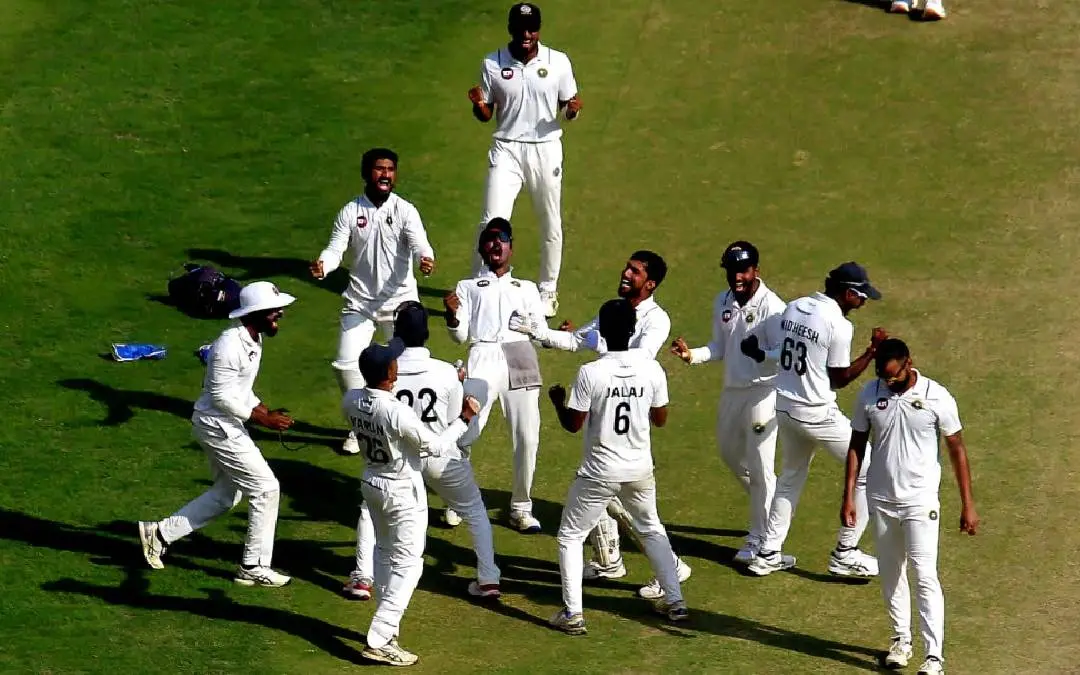
Kerala’s maiden entry into this year’s drawn Ranji Trophy final—where Vidarbha was declared winners based on a first-innings lead—marks a watershed moment. Since the state’s debut in the country's premier domestic tournament in 1957, its best performance had been a lone semi-final appearance in 2018-19. For decades, Kerala languished at the bottom of the table, often sharing the last spot with Andhra Pradesh, while other South Indian states produced cricketing stalwarts.
Isolated sparks of brilliance—like Balan Pandit’s double century against Andhra in 1959-60 or seamer Manikanta Kurup’s five-wicket haul against the formidable Hyderabad in 1970—were rare highlights.
Kerala cricket’s tragic hero, S. Sreesanth, remains the only player from the state to have represented India in all formats of the game. A vibrant presence in the national squad, the irrepressible medium pacer played a crucial role in India's victories in the 2007 T20 World Cup and the 2011 Cricket World Cup. However, at the peak of his career, his promising journey was cut short at 30 by the IPL spot-fixing scandal, a blow many believe was unjust, and pushed into play some unremarkable innings in films and politics.
Beyond these, Kerala’s cricketing legacy was largely confined to nostalgic tales of the pioneers from Thalassery, the cradle of cricket and cakes, led by the Mambally family, who not only shaped the game in the region but also founded the iconic Shanta Bakery. Now, with this historic Ranji Trophy run, Kerala cricket, which has produced only two test players (Tinu Yohannan and Sreesanth) until now, has finally stepped out of the shadows.
Kerala’s remarkable Ranji Trophy campaign this year becomes even more significant as it played without its three most prominent national players—Sanju Samson, Sandeep Warrier and Basil Thampi. Samson, Kerala’s lone representative in India’s current T20 and ODI squads, has been a key figure in limited-overs cricket. Warrier earned a T20 cap for India against Sri Lanka in 2021, while Thampi was part of the Indian T20 squad that toured Sri Lanka in 2017, though he didn’t get a game.
Neither did the current Kerala Ranji team get the services of the state's two players picked up for IPL 2025 besides Samson (Rajasthan Royals, Rs 18 crore) and Sachin (Sun Risers, Hyderabad, Rs 30 lakhs)- wicket keeper-batter Vishnu Vinod (Punjab Kings, Rs 95 lakhs) or Vignesh Puthur, the young debutant left arm spinner (Mumbai Indians, Rs 30 lakhs) who is yet to make it to the state's senior team. The Kerala players who went without takers at the IPL 2025 auction were Warrier, Rohan Kunnummal, Azharuddeen, Nizar and Abdul Basith. Other notable absentees in the current state Ranji team were the talented seniors, KM Asif and Basith.
Beyond the contributions of Kerala’s talented players and the expertise of new state coach Amay Khurasia, a former Indian cricketer from Madhya Pradesh, what truly fueled the team’s turnaround in the current Ranji season? It would be absurd for the present Kerala Cricket Association (KCA) to claim all the credit. Yet, much of the success stems from the KCA’s systematic efforts over the past two decades to enhance both human and physical cricket infrastructure.
Ironically, this period also saw unprecedented internal discord within both the team and the KCA. In fact, revolt among the players surfaced soon after Kerala reached the Ranji Trophy quarter finals in 2017-18, highlighting the deep divisions that ran parallel to the state’s cricketing progress.
Almost the entire team rose against the captain, Sachin Baby, accusing him of being arrogant, selfish, temperamental and authoritarian. A letter signed by 13 players was submitted to the KCA demanding the removal of Baby as captain. Among the signatories were Samson, Warrier and also the current Kerala stars like Mohammed Azharuddin, Salman Nizar and MD Nidheesh.
The letter said; “When the team wins, he (Sachin) takes credit and when it loses he puts the blame on the team members. He has always been speaking ill of the players who are very much disturbed, demoralised, hurt and are losing focus. Some of the players who were part of the team that reached quarter finals last season opted to play for other states this year because of the ill-treatment meted out to them by the skipper. All of us feel the need for leadership change which will serve the best interests of the team.”. The revolt occurred while the team was touring Sri Lanka for practice matches preceding the following season.
However, KCA didn't take the revolt kindly and quelled it forcefully. It suspended five of the rebels immediately for gross indiscipline in September 2018. This was done after consulting with the team's Australian coach Dave Whatmore and issuing show-cause notices to the rebels after an inquiry. Those suspended included Warrier and Azharuddeen besides Rohan Prem, Raiphie Vincent Gomez and KM Asif. They were also fined with a penalty of Rs 1 lakh each. Though the other eight signatories escaped suspension, they weren't spared the fine. This had an immediate impact as the rebels soon tendered apologies to the KCA following which the suspension against four of them (except for Gomez) was revoked. Baby was retained as the captain.
Around the same time, an ugly spat arose within KCA against its President, TC Mathew who was the architect of the great strides the state's cricket had started making. Mathew, a lawyer from Idukki, was the KCA treasurer during 1997-2005 who subsequently went on to become the secretary and the president in 2014. Mathew was also elected as one of the vice presidents of the Board of Cricket Control for Cricket in India (BCCI).
A close confidante of the then BCCI President N Srinivasan, Mathew was appointed as the National Cricket Academy chairman and member of IPL Governing Council. Thanks to his clout with the BCCI, Mathew implemented several measures to radically transform Kerala cricket, aimed to make the state Ranji champion by 2020. These included wider scouting of young talents, setting up cricket academies and sports hostels (“CASH”) in hundreds of schools and colleges, buying hundreds of acres of land for building turf wickets in many districts, upgrading the skills of players, coaches, umpires, curators, providing assistance to budding cricketers etc. Kerala which had only one turf wicket of quality boasts of 17 now thanks to the initiatives of this period.
Newly built indoor facilities addressed the challenges faced in the field of training during Kerala's rainy seasons. The team’s self esteem was enhanced through public celebrations of their talent. The team received wider exposure through cricketing tours abroad. Besides bringing in former cricketer Chandrakant Pandit from Maharashtra as the state coach, a foreign coach -Whatmore- was appointed for the first time during his time. Current stars like Nizar and Azharuddeen are products of the CASH scheme.
Results from these began to show as Kerala for the first time entered the quarter final in 2017 and to the semis next year. However, by then, success had started fuelling envy and differences within the KCA. In early 2017, following Justice Lodha Committee’s recommendations to the BCCI, all office bearers of the national and the state cricket associations including Mathew who had completed two terms stepped down.
Soon, a bitter power struggle brewing inside the KCA surfaced in full. Following a complaint submitted by one district official and an inquiry, Mathew was suspended from KCA membership and was accused of committing financial and other irregularities while holding office. Subsequently, an ombudsman (Justice V. Ramkumar) appointed by the KCA, ordered Mathew to pay back over Rs 2 crores. The case is still pending in the Kerala High Court while Mathew left cricket administration for good. Mathew’s detractors have since dominated the KCA.
Though these sordid incidents certainly affected the careers of many young players and administrators, the current state team appears to have valiantly overcome them all. That too collectively under the same captain and by most of the players who rebelled against him some years ago. Kerala should in every possible way acknowledge their inspiring performance. Now the question is whether Kerala cricket will take forward its historic gains further? Will it capture next year the trophy that it missed narrowly this time? Will more players from the state don the national colours in near future and be sought by IPL teams?
The KCA has once again found itself in the dock, this time over its treatment of Kerala’s best player, Sanju Samson, which led to his exclusion from the state squad for the Vijay Hazare Trophy. Many believe the incident was driven by petty ego clashes and a bloated bureaucracy rather than cricketing merit.
Adding to the discontent, sources suggest that Karun Nair—the Vidarbha star who shattered Kerala’s Ranji Trophy dreams in the final—would have played for his native Kerala had the KCA been more accommodating. Meanwhile, signs of serious internal discord within the current leadership are becoming increasingly evident.
When will the KCA set aside its politics and personal agendas to allow Kerala’s talented cricketers to flourish?