Reclaim Temples: The Kerala Story
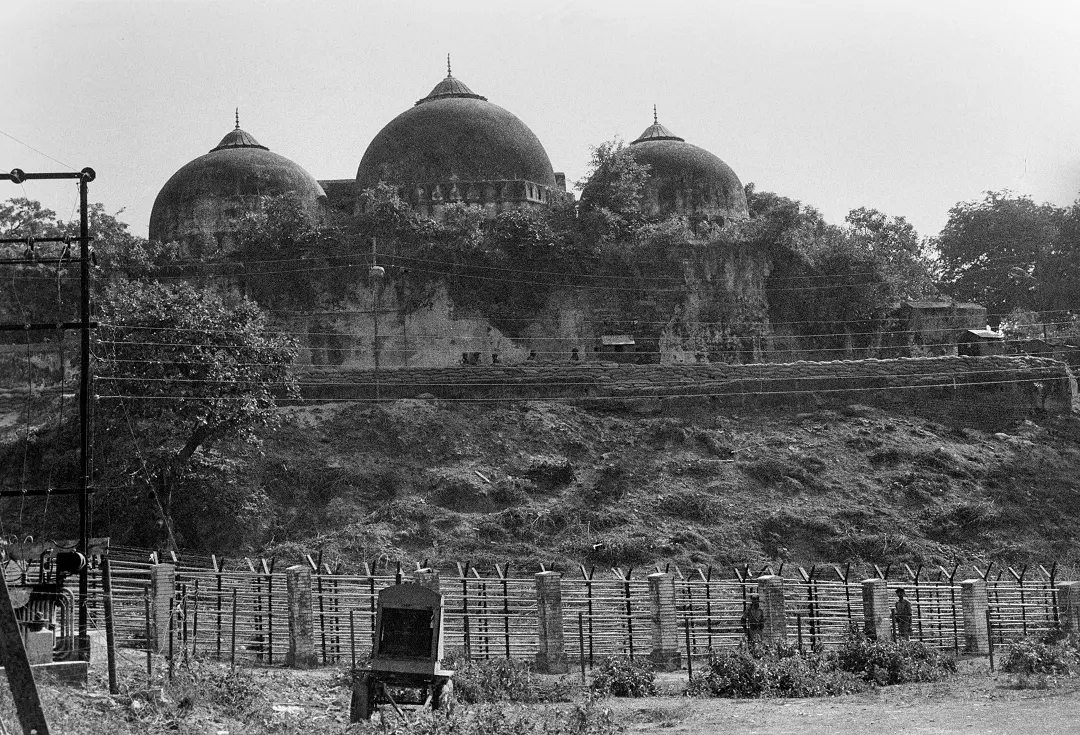
Communal passions and violence appear to be engulfing North India once again, echoing the days of the Ram Janmabhoomi movement and Babri Masjid’s demolition. They stem from the efforts of Hindutva groups backed by BJP-led state governments, the Archeological Survey of India (ASI) and even lower courts to “reclaim temples” allegedly destroyed by Muslim invaders or rulers centuries ago and replaced them with mosques. Although it is claimed there are as many as 60,000 such sites to be reclaimed in India and Bangladesh, five prominent mosques have already been given notice under this agenda, triggering violence like what is being witnessed at the Shahi Jama Masjid in Sambhal, Uttar Pradesh where five lives were lost. The other mosques under scrutiny are Ajmer’s famous Sufi saint Khwaja Moinuddeen Chishti’s mausoleum (dargah) in Rajasthan, revered by all communities for centuries, Varanasi’s Gyanvapi mosque, Mathura’s Shahi Eidgah Masjid from the Aurangaseb-era and Indore’s Bhojsala-Kamal-Maula mosque in Madhya Pradesh. Recall the Sangh’s war cry of the Ayodhya movement- “Yeh (Ayodhya) Tho Kewal Jhanki Hai, Mathura Kashi Baki Hai”. (Ayodhya is only a starter; Mathura and Kashi are still left).
While the reclaim movement has not gained momentum in South India, likely due to the weaker presence of Hindutva forces, Kerala is not entirely untouched. A key text driving this campaign, Hindu Temples: What Happened to Them?, lists approximately 1,800 temples allegedly destroyed to build Islamic structures, including several in South Indian states. This two-volume book, authored in 1990 by Arun Shourie (he is now BJP’s friend-turned-foe) and three others, was initially meant to bolster the Ram Janmabhoomi movement that led to the Babri Masjid's demolition. Two Muslim structures in Kerala mentioned in the book are Tipu Sultan’s fort in Palakkad and a Jama Masjid in Kollam (unclear which one exactly). The book claims that Marxist historians erased evidence of more such incidents in Kerala.
A swanky multimedia website, “reclaimtemples.com”, run by a group called Reclaim Temples Global Network, apparently based in Kozhikode, spearheads a campaign with pictures, videos and other details of the temples to be revived with requests for donations. Though claimed to be a global network, it features ongoing fund-raising campaigns (target: Rs 10-20 lakh for each) only for Kerala temples allegedly destroyed by Tipu or during the Moplah revolts. The following are the temples with the amounts so far collected for revival in brackets.
- Odappallam Kirata Shiva Parvathy temple in Sultan Bathery, Wayanad. (Rs 34,125)
- Cholakkara Durga temple, Valavannur, Malappuram. (Rs 67,910)
- Avanamkulam Bhagavathi temple, Edachalam, Kuttippuram, Malappuram. (Rs 1.35 lakhs)
- Ayyamkulangara Umamaheswara temple, Chemmanthatta, Malappuram. (Rs 1.46 lakhs).
- Thalakkadavu Bhagavathi temple, Malappuram.
Another project featured in the section is the “Hindu Genocide Documentation”, for which Rs 15,000 has been collected until now. The website says: “The purpose is to document the Moplah Riots which had started after the invasion of Hyder Ali and Tipu Sultan. Just like the Jewish Holocaust, it has to be ensured that every person, from children to adults, are aware of the details of the riots and the mentality behind it and adequate measures can be taken to prevent it. We cannot expect the government to include it in the curriculum. So we are charting an alternate path where multimedia content will be generated to target various audiences of all ages and make them understand the genocide. This is a pretty expensive project where we have to undertake a lot of research, publish books, documentaries and other multimedia content with creative visualisation. Your support will help us in creating a social change.”
The website also has a heritage revival project to revive ancient and dilapidated temples. All the completed projects under this also are from Kerala; Chalissery Siva temple, Alathiyur Subrahmanya temple, and the Malayambadi Narasimha temple.
Perhaps it is Kerala's secular tradition that restrains the state’s Sangh leaders from accelerating in this direction, unlike their northern counterparts. Yet, only time will tell how long it can hold given the speed with which Kerala changes.
Dave’s tears
Karan Thapar, the great Indian griller, is known for making the celebrities he interviews seethe with anger, like Jayalalithaa in 2002, or walk out in disgust as Narendra Modi did in 2007. But nobody has broken down in front of Thapar like Dushyant Dave, the eminent lawyer, did the other day. Dave has been as much known for his unwavering commitment to secularism and outspokenness as for his emotional nature. Two years ago, the firebrand lawyer had burst into tears during his speech bidding farewell to Chief Justice N Venkata Ramana, who he described as a truly citizen's judge. Obviously, Dave must have been overwhelmed by the welcome break the upright Ramana’s tenure marked from a chain of recent CJIs seen busy to please the executive.
But unlike with Jayalalithaa or Modi, it wasn't Thapar who made Dave emotional. The lawyer's tearful moment came while narrating how India was being divided further into communal lines and the Muslim minority pushed to the margins through the increasing attempts to convert more mosques into temples, as happened before with the Babri Masjid.
According to Dave, the person primarily responsible for the present catastrophic polarisation is DY Chandrachud, former Chief Justice of India. Now, Congress has also held Chandrachud accountable for the dangerous moves backed not just by BJP-led state governments but also by lower echelons of the judiciary.
Chandrachud’s culpability arises from his two controversial acts. The first was his oral observation on 20 May 2022 while dismissing the objections against a survey at the 17th-century Varanasi’s Gyanvapi mosque complex. He held that a scientific, non-invasive survey to ascertain a place’s religious character did not violate the provisions of the Places of Worship (special provisions) Act (POW) of 1991.
Chandrachud’s second act was the August 2023 judgement by the bench he headed as CJI which refused to stay the Allahabad High Court order allowing the survey at the 17th-century Gyanvapi complex ordered by a Varanasi court. The ASI survey at the complex claimed to have found temple remnants underneath.
How are these two acts of the former CJI legally and morally suspect? The landmark POW passed by the parliament in 1991 explicitly barred any attempt to change the religious character of any place of worship as it existed on 15 August 1947. The Act also prohibited even judicial review in this matter. It, however, exempted the Babri Masjid-Ram Janmabhoomi site since litigation over it had been ongoing for many years.
Chandrachud’s justification for permitting a survey was that it would only ascertain and not alter its religious character, which the POW prohibited. This was too visibly facile, as those who approached the Allahabad court to conduct the survey had never hidden that it was only the first step towards the objective to “recapture the temple”.
Chandrachud’s act was morally suspect because it indirectly bypassed the Supreme Court’s final judgement on the Ayodhya dispute, delivered by the bench, which included him. Despite allowing the Ram temple to be built on the disputed site, the five-member bench had said it should not become a precedent to use “historical wrongs to solve modern disputes”. It also observed that the masjid's demolition was “egregious” and upheld the validity of POW 1991. “It was hoped that the judgement, despite its legal flaws and shoddy reasoning, would put a closure to the mandir-masjid disputes once and for all”, wrote Live Law’s editor, Manu Sebastian. Dave contends that Chandrachud did a disservice to the Constitution and permission of the survey amounted to contempt of court.
Dave’s tears symbolised the sad state of affairs in India. They also brought to mind the riveting South African novel, “Cry My Beloved Country” by Alan Paton, which chronicled the manufactured divisions between the Whites and Blacks that gave rise to apartheid, one of the most barbarian systems in human history. It was India that shed tears through Dave.