The 'Divya Affair'
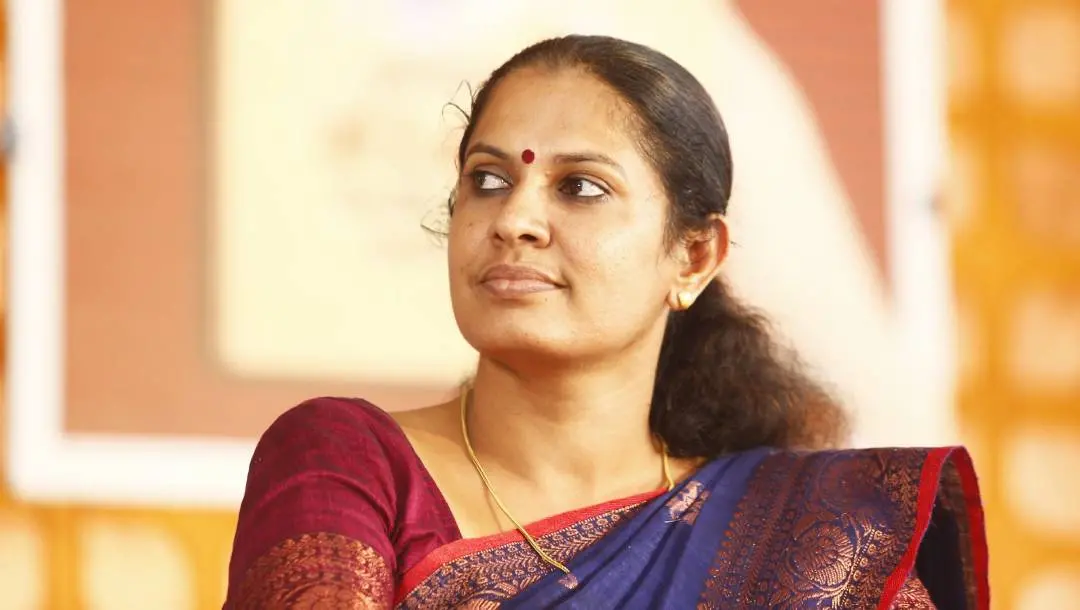
In the past month, those following Kerala's media could be forgiven for believing that the only issue of importance in the world is the tragic suicide of Naveen Babu, an Additional District Magistrate. The narrative suggests that the most infamous criminal in Kerala's history is PP Divya, the CPI(M) leader and Kannur District Panchayat President, whom the media has collectively deemed responsible for driving Babu to death. Consequently, there is a palpable hunger for Divya’s blood.
Babu’s suicide is undeniably tragic, and his family deserves the utmost sympathy and support. Equally undeniable are Divya’s improper insinuations against Babu, which she made at his send-off meeting - which she attended uninvited - a breach of basic decency. While it is essential for political leaders to call out corruption, reports indicate that official inquiries have established Babu as an honest officer, rendering Divya’s allegations baseless. This fact heightens the unacceptability of her actions, which appear grossly uninformed and possibly intended to mislead. While her resignation from the District Panchayat was appropriate, her two-week evasion of the police was inexcusable for someone in her position. This has also damaged the already beleaguered LDF government's image even grievously.
Divya’s hubris reflects a broader issue: the pervasive arrogance and vanity that have permeated the CPI(M) leadership, particularly those from Kannur, over the past few years. This behaviour escalated following the LDF’s unprecedented re-election in 2021. The party itself has acknowledged that such conduct contributed to the anti-incumbency wave that led to its electoral losses in May. This contrasts starkly with its past leaders who garnered public affection through their simplicity, integrity and humanity which made “sakhav” (comrade), the term Communists referred to each other as Kerala’s most beloved honorific. Who can forget the love and egalitarian spirit with which the poor and illiterate Karamban addresses his leader Saghav Gopalan as “thagave” (he can’t say saghav correctly) in Thoppil Bhasi’s immortal “Ningal Enne Communist Aakki”. In contrast, today’s leaders are at risk of turning “comrade” into a term of derision, like what happened to the term “tovarishch” in Stalinist Russia.
However, the situation is more complex than it appears. While Divya’s remarks were reprehensible, do they warrant the unprecedented media witch-hunt directed at her, depicting the young woman leader with a relatively unblemished record, as Kerala's most vicious character ? Hasn't the state seen many unscrupulous leaders who have engaged in corruption, opportunism, sexual harassment and even violence who never faced such relentless scrutiny?
Moreover, is the media not complicit in the very charges it levels against Divya? How many media organisations can claim never to have made baseless accusations? Similarly, have political figures now expressing outrage never made unsubstantiated allegations that later proved false?
Our morally indignant television anchors and panellists, scandalised by Divya, remain silent on the rampant misogyny and physical threats directed at her from social media, revealing a troubling truth about the “enlightened” Kerala society. The only distinguishing factor here is that Naveen Babu, the target of Divya’s accusations, later took his life. Yet, have we not witnessed the media sensationalising accusations without solid evidence against numerous politicians? If those individuals had also chosen to end their lives, would the media and society have redirected their outrage at the accusers?
Currently, there is no definitive evidence linking Babu’s death to Divya’s statements. What if the reasons for his suicide were unrelated? If anyone has scarred Babu’s psyche, they must be held accountable. However, until evidence emerges, the media has no right to conduct trials and pass judgment. Who will answer for the damage suffered by Divya if she is ultimately found innocent?
Suicide reflects the mental state of the individual, and the pain leading someone to take such a drastic step is often subjective and varies widely. Therefore, directly attributing responsibility for another's suicide is fraught with complications. Moreover, how many of us can claim never to have faced unjust accusations? Is suicide the solution? It is difficult to comprehend how a civil servant nearing retirement could be profoundly affected by a district-level politician's indirect comments. While we must acknowledge the validity of another's suffering, using one person’s distress as a benchmark for collective judgment can lead to dangerous conclusions.
Despite the Thalassery Principal District and Sessions Judge’s rejection of Divya’s anticipatory bail petition and her subsequent arrest, abetment to suicide is a challenging charge to prove. The conviction rate for this offence, under Section 306 of the IPC, was a mere 17.5% in 2022. The Supreme Court has recently warned against “unnecessary prosecutions” in such cases.
This does not imply that the media should shy away from questioning Divya’s outburst. However, a constant witch-hunt undermines democratic principles, even though the media has historically engaged in such practices. Just as Alfred Dreyfus faced a harrowing ordeal in 19th-century France, we have our own “Nambi Narayanan Affair” in contemporary Kerala. Will a “Divya Affair” come to haunt Kerala later? In an era dominated by social media, the media witch-hunts have reached new heights, driven by survival instincts against the backdrop of an increasingly toxic online environment.
Another peculiar Kerala media fixation revolves around alleged police lapses during Thrissur Pooram. Is this truly a matter of life and death in Kerala when numerous pressing issues demand attention, especially in the anvil of three crucial by-elections? The continuous focus on this non-issue, notwithstanding its political overtones, even by ostensibly secular political parties, raises questions about priorities. While the BJP may have political motives in highlighting this issue, it is perplexing to see the CPI relentlessly pursue it merely because its candidate faced electoral defeat in Thrissur.
Beyond mere triviality, the media's and political parties’ obsession with Pooram signals a fundamental shift in societal values to embrace sectarian religiosity and archaic rituals, as demonstrated especially after the Sabarimala verdict. This regression, previously criticised by all our great social reformers, is now evident even among secular parties that have lost their resolve to resist this shift, as demonstrated by their positions on the Sabarimala issue.
This paradigm shift in values is mirrored by the media, which is surprisingly timid when confronted with religious matters. For instance, the negligence that caused a fireworks disaster in a temple at Neeleswaram was not pursued adequately, and the responsible parties remain unaccountable. Despite past tragedies, such as the 2016 Puttingal Temple fire that claimed over 100 lives, the media has failed to address ongoing safety violations.
Alarmingly, Kerala has yet to implement essential safety measures mandated by the central government regarding fireworks, with hundreds of fatalities reported in related accidents over the past two decades. Mandatory guidelines require that fireworks be held 100 meters away from the crowds and 200 meters from fireworks storage. According to reports, over 500 fatalities have occurred in 750 fireworks-related accidents over the past twenty years due to non-adherence to safety protocols. Police’s First Information Report says that the fireworks at Neeleswaram were held without the necessary license, permission, or observation of mandatory safety guidelines. Is there any genuine concern from the media or civil society?
Recently, Swami Sivaswaroopananda expressed dismay at how even temples founded by Sri Narayana Guru have succumbed to competitive displays of rituals like elephant parades and fireworks that he condemned. Yet, who cares?