D’Oliveira to Bavuma: History repays a debt
"What do they know of cricket who only cricket know?” (Beyond A Boundary, CLR James,1963).
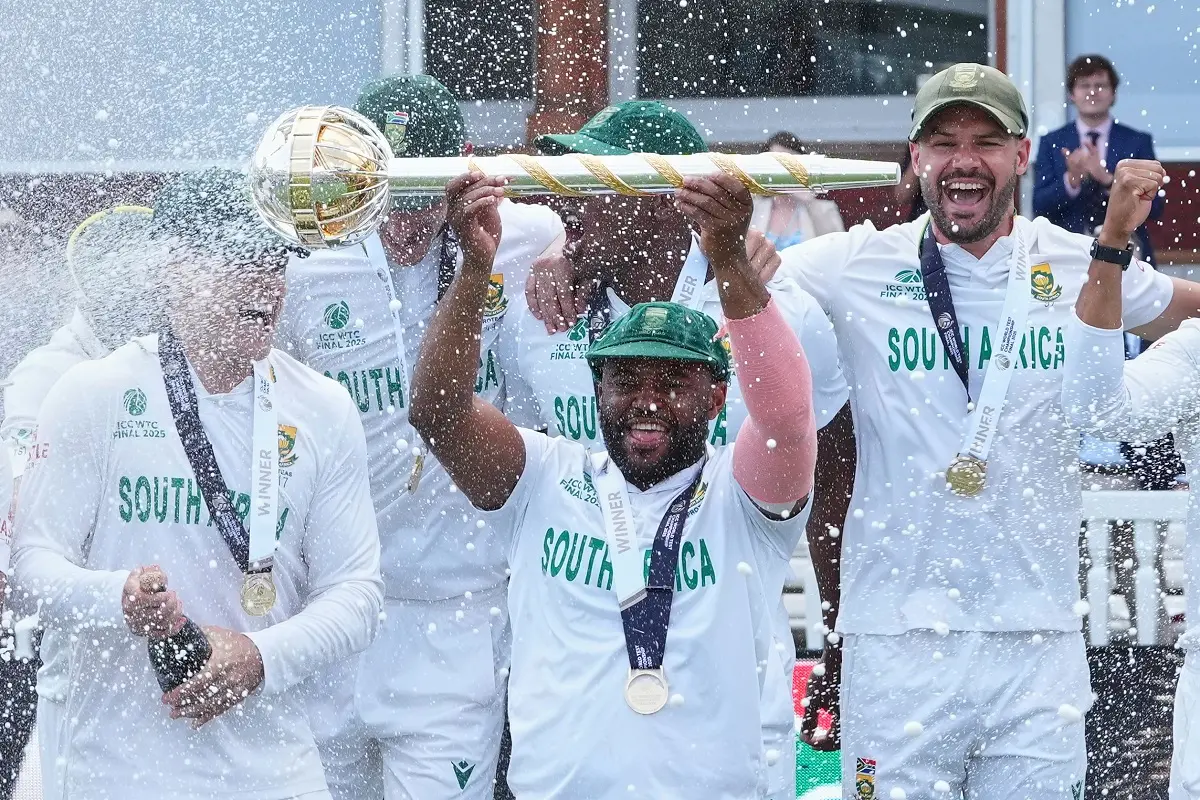
In 1968, South Africa refused to play against England because their team included a non-white South African cricketer. Over five decades later, the country’s first Black African Test captain has led South Africa to World Cup glory. History may take its time, but it rarely forgets to settle its debts.
On June 14, Temba Bavuma made history by becoming the first black South African to captain his side to a World Test Championship title. It is a moment that compels us to remember an immortal name: Basil D’Oliveira (1931-2011).
Born in Cape Town, South Africa, to a working-class migrant family of presumed Indo-Portuguese (likely Goan) descent, D’Oliveira embodied the deep scars of apartheid—a brutal system that systematically crushed the dreams and erased the futures of South Africa’s black and mixed-race communities.
Basil’s cricket-loving father, John, initiated all his three sons into the game, which was highly popular among the black and coloured communities of District Six where they lived. All three brothers -Basil, Ivan and Peter- soon became Cape Town’s stars. Basil was barely 21 when he became a sensation by hitting seven sixes and one four in an eight-ball over. Two years later, he scored 225 in 75 minutes out of his team’s total of 236. A good medium pacer too, Basil became the captain of Cape Town’s top cricket club, St Augustine’s, which his father had also led.
Even before apartheid was institutionalised in South Africa with the white supremacist National Party’s rise to power in 1948, racial segregation was in force in the country at all levels, including in sports. Only whites could represent the country in official international cricket matches, while Black, Indian and mixed-race cricketers played only in segregated non-white leagues in their impoverished ghettoes. None of the talented D’Oliveira brothers, like every other non-white sportsperson in the country, could break into the country’s top-level cricket. Among South Africa’s remarkable players of the period who faced similar exclusion were the black African fast bowler, Frank Roro, considered the quickest during the 1950s and 1960s, or Indians like Khalil Asmal, wicket-keeper batsman, Rangaswamy 'Papa’ Pillay and many others.
D’Oliveira spent his prime years clinging to the hope of one day playing for his country. But as he crossed 28 years, he knew he couldn’t wait any longer. In a final bid to chase his dream, he wrote a letter to his favourite cricket commentator, John Arlott of the BBC, though he never knew the famed journalist personally. Describing his tragic plight in detail, D’Oliveira requested Arlott to help him play professional cricket in England. Later, D’Oliveira said what prompted him to write to Arlott: “His voice and words he spoke convinced me he was a nice and compassionate man”. Though D’Oliveira had little hope that his plea would lead anywhere, some weeks later he was unexpectedly contacted by the Middleton Cricket Club. They offered him a summer contract to play in the Central Lancashire League. Overjoyed, D’Oliveira quickly made arrangements to travel to England, his journey made possible by the generous contributions of Cape Town’s equally thrilled well-wishers.
It was 1960. D’Oliveira took some time to acclimatise to England’s cold climate and unfamiliar culture—a transition in which Arlott, a staunch anti-apartheid campaigner, offered steady support. Before long, D’Oliveira rose to the top of the batting averages in the Central Lancashire League, even surpassing the legendary West Indian, Gary Sobers. Three years later, D’Oliveira signed up with the powerful county team, Worcestershire, and made his first-class debut at 30, an age when most cricketers contemplate retirement. The first non-white South African to play county cricket, D’Oliveira scored a century in his debut and helped Worcestershire become champions in 1964.
At 34, D’Oliveira, now a British citizen, was selected to play for England in the test series against the West Indies at Lord's in 1966. Though England lost the series, D’Oliveira scored three half-centuries and took a few wickets in the series. Next year, he was in the England squad that toured India and Pakistan when he hit his first test century against India and two half-centuries against Pakistan, to be selected as a Wisden cricketer.
However, 1968 witnessed the most dramatic episodes in not just D’Oliveira’s life but also in international sports history. Australia was in England for a five-test Ashes series. The Aussies crushed the hosts in the first test, but D’Oliveira emerged top scorer with an unbeaten 87. Yet, he was mysteriously dropped for the next three tests. This surprised all, and English captain Len Hutton even protested. But the unconvincing official explanation was that D'Olivera's game was unsuitable for the next tests’ pitches. However, it was later known that the decision was under pressure from the South African apartheid regime. However, as all three tests were drawn, England required a win in the last test to draw the series and avoid an embarrassing Ashes series defeat. So Dolly (as D’Oliveira was known) was called back and he created history by scoring a magnificent century to help England win and draw the series!
This great knock made Dolly’s inclusion in the next English team for the coming South African tour a certainty. Dolly, too, looked forward to a chance to prove himself in his home country which drove him out. Yet, when the team was announced, D’Oliveira’s name was absent! It shocked England, and Arlott openly castigated the selectors. But by then, South Africa’s racist Prime Minister John Vorster had informed the British government that it wouldn't play the series if Dolly was in. As Matthew Engel wrote in The Guardian, “If D’Oliveira toured, he would be an instant hero to the entire non‑white population, and for the white minority government under John Vorster, that would never do”.
Following a public outcry, Dolly was reinducted into the team, ostensibly because a selected player was injured before the tour began. In response, the arrogant South African government simply cancelled the entire series. This stunned the world, and the international sporting community sprang into action and banned South Africa from participating in any global sports event. Besides the International Cricket Council, organisations like the Olympic Committee and the World Football Federation (FIFA) were the architects of the ban. The historic ban remained for 22 years until South Africa dismantled apartheid in 1990 and came out of isolation.
Known in history as the “D’Oliveira Affair,” this dramatic episode powerfully demonstrated the enduring truth that, like any other human activity, sport is not immune to political, social, and moral struggles. It is, in fact, a fiercely contested arena where power, class, and race intersect—a reality the celebrated West Indian historian C.L.R. James had brilliantly illuminated.
The post-apartheid governments led by Nelson Mandela onwards made conscious efforts to stamp out segregation from all levels of South African life, including sports. In 2000, D’Oliveira was nominated as one of 10 South African cricketers of the century, and subsequently, a perpetual trophy was instituted in his name -Basil D’Oliveira Trophy- for the test series between England and South Africa. In 2005, he was appointed a Commander of the British Empire (CBE) by the Queen of England. His brother Ivan, sons Damian and Brett, also played first-class cricket for Worcestershire.
Since the end of apartheid, the South African team has been known for many outstanding non- white players. They start from the brilliant fast bowler Makhaya Ntini, the first black player to play (1998) for the country, Ashwell Prince, South Africa’s first non-white captain (he was “coloured” and only an interim captain in 2006), Hashim Amla of Indian descent, the Pakistan-born Imran Tahir, and finally the first black captain, Temba Bavuma, and many more.
Affirmative action measures, including targets and quotas for Black and Coloured communities, have been made mandatory to help redress the effects of decades-long, brutal discrimination across every sphere—education, employment, and sports. Yet, South Africa’s long legacy of segregation continues to cast a shadow. Racial prejudices, entrenched attitudes, systemic inequities, and disparities in access persist, including in the world of sports. Ntini has described his sense of alienation in the white-dominated team and dressing room. Bavuma has been subjected to racist slurs, even about his short physique and often referred to as a “quota player” despite his brilliant performances. In 2020, three white South African players were in the news for refusing to join their teammates in the team's collective decision to bend their knees to express unity against racism during the global Black Lives Matter movement.
Even when his life and career triggered such momentous waves in political and sporting history, D’Oliveira had remained a silent spectator. He once said: "I just wanted to play cricket. I didn't want to be a political figure, but if my situation helped bring about change, I am proud of that.”.