Redefining Masculinity: How South Indian cinema's heroes have evolved
Robert Connell, a pioneer in the study of masculinities seen in works such as Masculinities (1995), Masculinities and Globalisation in Men and Masculinities Vol.I.nr.1 (1998) and The Men and the Boys (2000) put forth for the first time that there are different kinds of masculinities and that one of these is dominant. This came like a beacon in theoretical studies surrounding men and what made men ‘men.’ The ‘dominant’ form of masculinity was defined by Connell as hegemonic masculinity. Other kinds of masculinity were either subsumed or marginalised and hegemonic masculinity was the frame of reference to live up to. The relationship between these different ways to be a man are characterised by conflict faced by most men - often in relation to women.
Is masculinity born, does it evolve over time or is it thrust on the man? Masculinity is not a monolith. It is not a homogenous term that can define all men of all ages across geography, culture, language class and time. It is an abstract, fluid and differential value that attaches itself to men subject to the time they function and live in, the class they belong to, the language they speak and the social ambience they move within, which, interestingly, are also not fixed in time and space. In his informed paper, Bengalis but not Men? Bhadralok Masculinities in Adda (SubVersions | Vol.1, Issue.1, (2013), 146- 170. Romit Chowdury lays bare how masculinities, “far from being natural, are made in particular socio-cultural contexts.”
What about the cinema in the Southern parts of India where we have contemporary heroes ranging from Kamal Haasan through Rajinikant, Mammooty, Mohanlal, Chiranjeevi, Suriya, Prithviraj, Ram Charan, Allu Arjun, Mahesh Babu, Dhanush, Dulquer Salmaan and many, many others who will certainly outrun the increasing number of macho heroes in Bollywood or even beyond Indian shores? They represent not only the evolution of masculinity in Southern cinema through its heroes but also bring across different kinds of masculinity from predominantly ‘macho’ in terms of their muscled, sexy body right through a virtual rainbow of masculinities that are focussed on the blending of a star-actor with the kind of characters he portrays and the screen image he has carefully constructed over his career.
Cinema has always been considered as a powerful voyeuristic medium. Women in India are figured into two essentialised categories of Tradition and Modernity. India sets up an interesting case in the post-independence period working in conjunction with the cinematic apparatus. A new nationalism develops linked with most intimate and ‘private’ emotions and women get caught as the body of relieving these private emotions in the bigger public context of the state and the cinematic apparatus. This social phenomenon has lasted up until now (as in the case of Bangalore city) and the posters become as W.J.T Mitchell purports- “a visual representation of the social.”
Kamal Haasan is an ideal example of an actor who is extremely short in height according to the normal expectations of the mass audience. But he won over his fans with his brilliant dancing skills, his versatile acting and his wonderfully flexible body language. He is among the very few Southern actors who proved his mettle as a reasonably marketable hero in Hindi cinema alongside films in his native state. His screen masculinity is more appropriately placed within post-Colonial, independent India ‘born’ in films with a romantic hero who can easily sacrifice his love for what he feels is “the greater good.” Examples are Sagar, and another film named Moondram Pirai (1982) later made in Hindi as Sadma directed by Balu Mahendra. Moondram Pirai was a box office success and had a theatrical run of over a year. Kamal Haasan won the Best Actor Award for his performance in the film at the National Awards. The character Kamal Haasan plays takes charge of and gives shelter to a young girl suffering from retrograde amnesia (Sridevi) and falls in love with her. But she forgets him entirely when she gets back to normalcy. His wonderful performance and macho image will be forever remembered in the silent film Pushpaka Vimana where he charismatically portrays how he accidentally loses touch with the girl he falls in love with.
Rajinikanth is another classic example of turning the macho hero concept in cinema on its head. Looks-wise, he has an overly dark skin, a thick lock of hair falling over his forehead when he was young that has now been replaced with a naturally bald pate and some screen tricks he invented such as throwing a burning cigarette into the air and getting it back into his mouth. He is more macho than Kamal Haasan and has a dashing charm about him that is not only hard to beat but is also attractive for the females in the audience. He has a naughty air about him in his screen presence and makes creative use of it that adds to his screen appeal. Western heroes might balk at Rajinikant’s dark skin and not exactly handsome looks but his comic timing, his physical flexibility and his quick changes of emotion wins him the fame at any time in any film till today though his appearances on the large screen have reduced in recent times.
Mohanlal who is 65 now, includes in his filmography landmark films that reinforced the larger-than-life male image. Titles like ‘Devaasuram,’ ‘Aaraam Thampuran,’ ‘Narasimham,’ and ‘Raavanaprabhu’ projected him as the ultimate alpha male, rooted in power, pride, and dominance. These roles elevated him to superstardom and became templates for commercial success in the industry. He has always been on the heavier side and never took pride in a macho body and yet remains one of the most popular heroes among his female fans in Southern films. He is not handsome in the conventional sense of the term. Neither does he fit into the Godly mould of the likes of N.T. Rama Rao, or Gemini or Shivaji Ganesan. But he has given screen masculinity his own distinctive approach and presentation which replaces “male aggression” with a deep sensitivity that goes much deeper than the hero’s physical charms do.
Masculinity is not surface male aggression which was in vogue in Indian cinema in general and South Indian cinema in particular. It goes much deeper than surface physicality and has a lasting impact on the audience. No actor in Indian cinema has been able to catch on the subtly understated masculinity on screen like Mammooty who will be 75 this year and Mohanlal.
Mammootty’s on-screen masculinity has evolved from the rigid, aggressive machismo of his 1990s blockbusters to the complex, vulnerable patriarchs of his recent cinema. He has masterfully subverted his own legendary alpha-male legacy to explore aging, queer identity, and emotional nuance, fundamentally reshaping the archetype of the South Indian hero. Whether he is portraying a closeted gay, middle-aged husband of Jyotika in Kaathal, or, the imprisoned writer in Mathilukal who keeps busy tending to his rose sapling or talking to the female prisoner across the wall who he never meets, Mammooty is among the most outstanding male heroes across Malayalam cinema whose macho image minus the testosterone but plus the moustachio-clad hero well into his sixties, whose films like The King, Hitler, and Kasaba featured him as an unapologetic, larger-than-life figure who commanded rooms, dominated dialogue, and occasionally exuded a rigid, possessive machismo. In films like Nanpakal Nerathu Mayakkam, Mammootty allows his characters he plays on screen to crumble, offering audiences a rare, unsettled, and profoundly human look at a big, stoic man brought to tears. He remains till date, the sole actor who sustains his evolving masculinity across not only films of different genres but also directed by different directors crossing the imaginary borders of mainstream and off-mainstream Malayalam cinema.
Hyper masculinity refers to the exaggeration of certain stereotypical masculine attributes such as aggression, fearlessness and emotional bankruptcy. Films of recent times featuring heroes like Chiranjeevi, Suriya, Prithviraj, Ram Charan, Allu Arjun, Ram Sharan and their peers are displaying on screen a kind of “hyper masculinity” which refers to the exaggeration of certain stereotypical masculine attributes such as aggression, fearlessness and emotional bankruptcy.
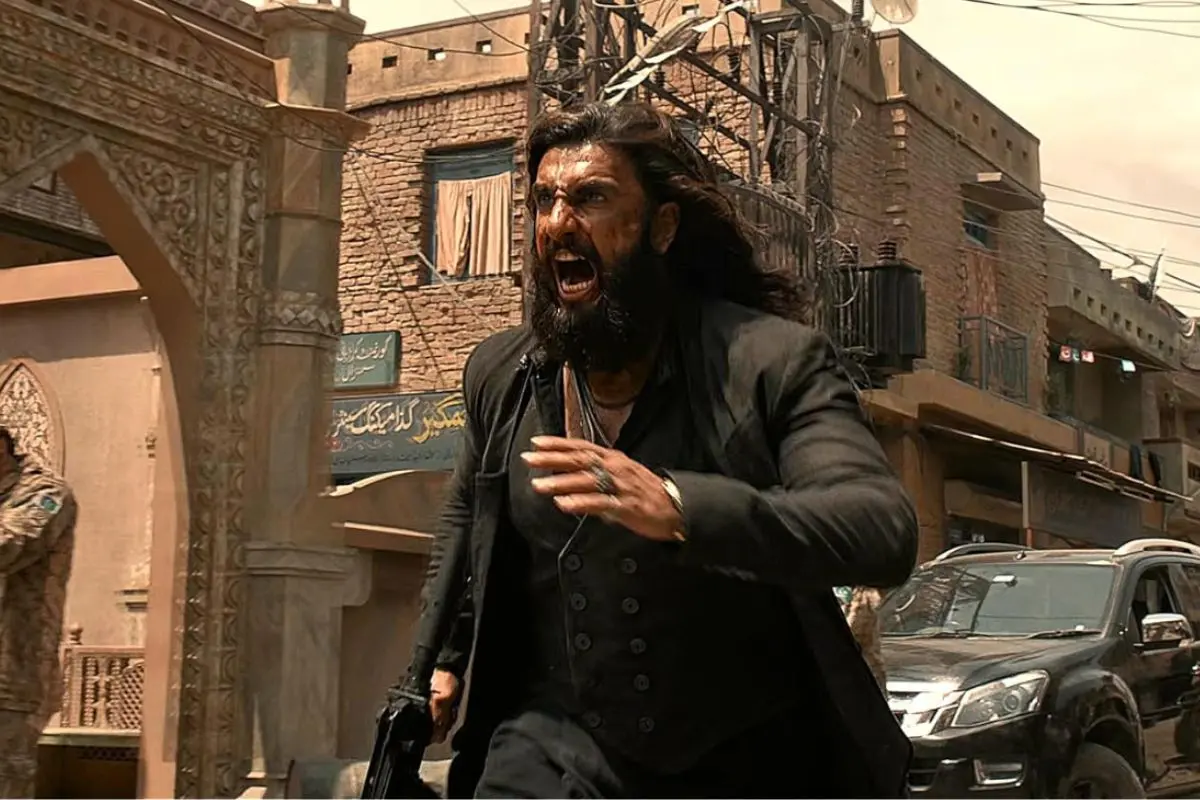
Films like Pushpa, RRR, Kantara and even Hindi blockbusters like Animal and Dhurandhar eulogise a somewhat hyper masculine, or rather, a toxic masculinity behaviour in the male protagonist. This is evidenced in the excessive and sometimes pointless male centric action sequences, mindless dialogues and heroes having chiselled bodies with 6-pack abs. Hyper masculinity refers to the exaggeration of certain stereotypical masculine attributes such as aggression, fearlessness and emotional bankruptcy.
Hegemonic masculinity is a kind of cultural structuring. The character of a man with particular ideal can be identified by the power domain belonged to culture. The man with a particular ideal in the modern inherently patriarchal societies where we live must have these qualifications which serve the social structure. The man with a particular ideal may be described as a productive man who internalises gender roles by following the social rules of man being the active and superior sex and woman being the passive and inferior sex. However, on the other hand, it is not possible to mention that there is only one masculinity definition. Masculinity is shaped by the codes of every society. And this is evident if one takes a close look at the evolutionary history of the changing image of the hero in South Indian cinema.
According to research by scholar Kausttuv Bakshi, “the representation of the male body has been extensively discussed in film and media studies in the last few decades. Following Mulvey’s (1975) work on the representation of the female body, attention has more recently turned to the representation of masculinity, paying particular attention to the male body and critical approaches in exploring the various facets through which masculinity is performed and embodied through the cinematic medium. (Exploitation, Victimhood and Performance: Interrogating Masculinity in Bariwali.)