The blurred background of Kerala’s scandals
This is the season of holidays and selfies. Friends send photos from Varkala with the sea behind them, or Munnar wrapped in mist. Look closer. The place is present, but barely. What dominates the frame is a face: sharp, centred, filling the image. Everything else fades into a blur.
This is not vanity. It is how we have trained ourselves to see: the individual in focus, everything else slipping into irrelevance. And this habit has quietly travelled from our phones into the way Kerala covers and consumes news.
We increasingly focus on individuals while events dissolve into the background. Institutions disappear. Systems fade from view. What remains sharp is the face: the personality, the celebrity, the accused, the villain of the moment. The person becomes the story, while the conditions that produced the story remain indistinct and largely unexamined.
Consider the actress assault case. Seven men were convicted for a crime that shocked Kerala – not in some remote corner, but in Kochi, Kerala’s own metropolitan centre. The verdict should have forced difficult conversations across institutions: cinema, policing, media, and society itself.
How did such culture of impunity take root? What conditions enabled the crime? What failed so completely that violence against a woman artist could be planned, executed, and sustained?
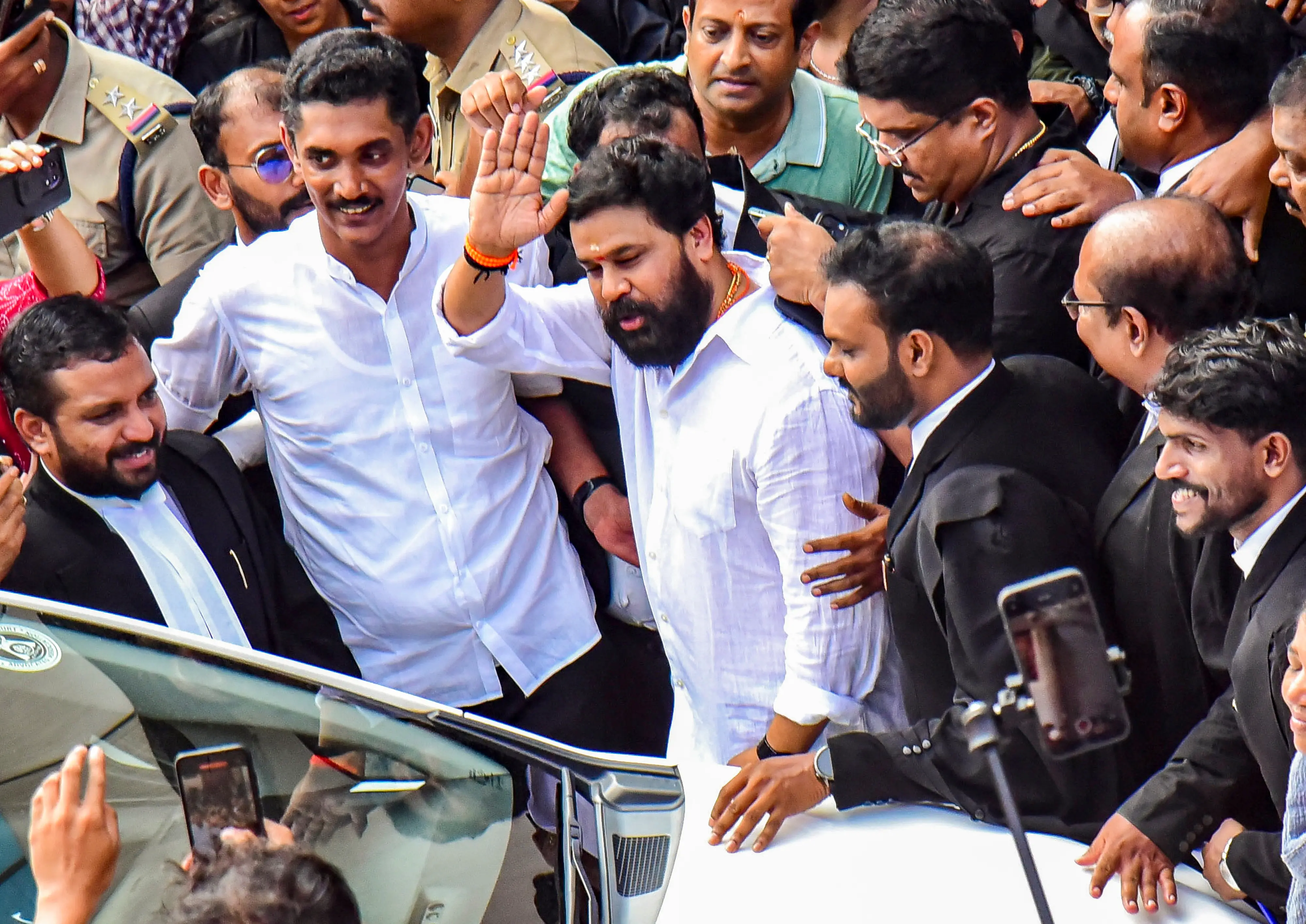
Instead, public memory narrowed. The spotlight tightened. The conversation increasingly revolved around one figure: actor Dileep. His alleged role, his defence, his public image. Social media camps hardened. Television debates followed suit. Seven convicted perpetrators receded into the background. One face remained in focus.
None of this diminishes the seriousness of the allegations against him. But was that the sum of the case? Was this merely about one man, or about a culture and a set of power relations that allow criminals to operate without the fear of consequence?
It was simpler to treat it as the former. Easier to argue about an individual than to interrogate an ecosystem that enabled a brutal assault. Easier to pick sides than to focus on the decay and find ways to stop the rot.
The same pattern is visible in the Sabarimala gold scandal. Even as investigations continue, public attention has already settled into familiar grooves. The discussion has revolved around faces and proximity: who met Unnikrishnan Potti, which politician knew which accused, whose photograph appeared where.
What has not travelled with the same intensity are questions that do not depend on the outcome of the investigation. How could irregularities of this scale occur within one of India’s most heavily administered pilgrimage centres? What systems of oversight existed, and how did they fail in practice? How many layers of authority had to malfunction – or chose to look the other way – for such irregularities to take place?
These are not questions of guilt; they are questions of morality. And they remain relevant regardless of who is eventually indicted or exonerated. Yet they struggle to hold attention because they do not come with a single face to fix blame upon.
It is tempting to blame television channels, social media algorithms, or irresponsible journalism. That would be incomplete. Audiences are not bystanders in this ecosystem; they are participants.
We reward personality-driven outrage with attention. Media organisations, under pressure from digital platforms, respond accordingly. As attention becomes currency, visibility is increasingly mistaken for expertise. Drama is cheaper than investigation; spectacle travels faster than context.
We click, forward, debate, and amplify faces rather than failures of structure. We keep the noise alive.
We have rarely tested what would happen if attention were withheld from spectacle and redirected towards systems. Such questions are institutional and deeply unglamorous. They demand focus rather than frenzy. They do not fit neatly into memes or prime-time shouting matches. And they offer no satisfaction of instant outrage.
As a result, the cycle repeats. Outrage surges after every scandal, but the attention narrows. The background blurs. Institutions remain largely unchanged, waiting quietly to fail again.
In that sense, Kerala is not disengaged. It is vocal, animated, and constantly reacting. Yet this activity often resembles sleepwalking – movement without direction, noise without learning. We move from scandal to scandal, always alert, rarely wiser.
Another scandal will come (in Kerala, they always do, every few weeks), it may be worth watching not just the news, but ourselves. What do we share? What do we debate? Where does our attention finally settle – on the person, or on the system that made the event possible?
Outrage has its place. But when it stops at faces, it changes little. Seeing the full picture requires adjusting focus – to notice not only who stands in the frame, but what the blurred background is trying to tell us.
Until then, we will keep mistaking motion for progress, and keep taking selfies when we should be studying the landscape.