When female actors face difficult choices in Malayalam cinema
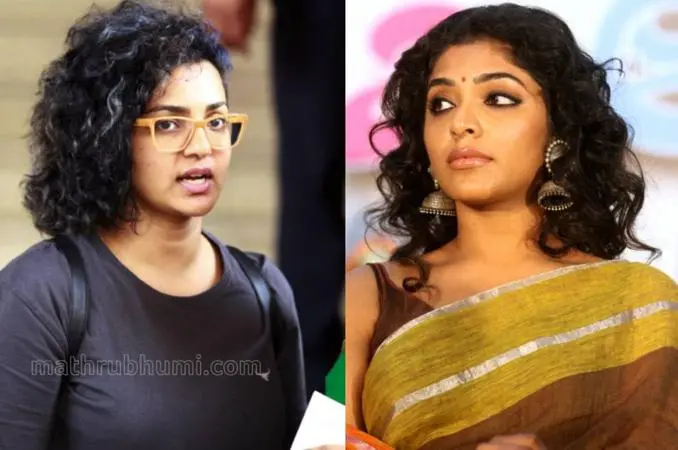
When Christo Tomy’s Ullozhukku (2024) was released, it drew wide praise for its layered female portrayals — brought to life with quiet precision by Urvashi and Parvathy Thiruvothu. Yet amid the acclaim, murmurs began to surface about one casting choice: Alencier Lopez, who played Parvathy’s father in the film.
For those unaware, Alencier was previously accused during the MeToo movement. Therefore, Parvathy, who is an outspoken member of the Women in Cinema Collective (WCC) and one of the most consistent voices demanding safer, more equitable spaces in Malayalam cinema, collaborating with him did not go unnoticed.
In an interview with The New Indian Express, the actor clarified her position: “I can separate art and the artist... If I were the producer, I wouldn’t be casting them. But as an actor, as a fellow employee, I can’t dictate to my employer whom they can or can’t cast.”
Two things stand out here. First, debutant Christo Tomy has always maintained that he pursued both Parvathy and Urvashi for years and that Ullozhukku could not have been made without them. Second, Alencier’s role could easily have been filled by someone else — a Kottayam Ramesh or Manoj KU, for instance — and still been extremely convincing. Which makes Parvathy’s claim of “inability to dictate” a complicated one. When an actor with her stature and credibility speaks, discomfort doesn’t go unheard.
Recently, a similar accusation was levelled at Rima Kallingal for collaborating with yet another MeToo-accused filmmaker, Sajin Babu, for Theatre. Rima, who has consistently aligned herself with the WCC’s call for accountability and safer workspaces, defended her choice (in the New Indian Express) by saying that she “really needed work.” She admitted this was a “selfish decision,” but added that since Sajin had accepted his mistake, she decided to go ahead with the film.
In the same breath, she maintained that the final say on justice rests with the survivors, and that actors often have to navigate complex professional realities to sustain their careers. It’s a fair acknowledgement of an industry’s harshness — yet her reasoning feels uneasy. If an apology alone becomes the threshold for forgiveness, then the trauma of survivors risks being trivialised. More worryingly, it contradicts the very principles Rima once embodied within the WCC — the belief that accountability must precede rehabilitation, not replace it.
Another disconcerting aspect is the pattern of double standards within the Women in Cinema Collective (WCC) itself. When one of its members, director Vidhu Vincent, collaborated with filmmaker and FEFKA general secretary B. Unnikrishnan, the organisation sought an explanation in 2020, citing Unnikrishnan’s controversial record — particularly his public support for actor Dileep, then accused in a sexual assault case in which the WCC had vocally supported the survivor.
The scrutiny led Vincent to resign from the collective, alleging that the WCC practised “double standards” and failed to apply the same moral lens to other members who worked with equally contentious figures. Around the same time, costume designer Stephy Xavior echoed similar sentiments, accusing the WCC of harbouring a “privileged layer” that shielded its core members. She alleged she was dropped unceremoniously from a project helmed by a WCC member, reinforcing the perception that the organisation’s commitment to equality doesn’t always extend inward.
It’s important to clarify that this isn’t about pitting women against women, but about recognising a larger, more uncomfortable truth. Increasingly, we’re seeing women who once stood at the forefront of change now cornered by the very structures they tried to resist. The Malayalam film industry, still overwhelmingly male-run, offers few steady roles for women past a certain age or beyond a narrow definition of glamour. Films with substantial, well-written female parts are rare, and the people greenlighting those projects are often the same men whose behaviour or politics have previously been questioned.
Not to forget the industry’s broader complicity when it comes to predators. Take, for instance, Hridayapoorvam, where actor Siddique, arrested for rape and later released on bail, shared significant screen space with Mohanlal and how disconcerting it was to watch it unfold on screen. Yet, no one expects Mohanlal, arguably one of the most powerful figures in Malayalam cinema, to take a stand. Similarly, Dileep (accused of masterminding his colleagues' abduction and assault) continues to headline films, make public appearances, and be celebrated at industry events, while the collective silence around him remains deafening. When a rape accused like Vedan is protected by both liberals and the government (he is part of the curriculum in at least two Universities) as he continues to moonlight as the voice of the oppressed, and a producer like Sandra Thomas is sidelined for daring to stand up against the male-dominated producers’ association, the cracks in the system become painfully clear. What this exposes is not just moral inconsistency but the selective nature of accountability in Malayalam cinema — where outrage is conveniently calibrated depending on who holds the mic and who threatens the existing power order. The same ecosystem that shelters men accused of violence or misconduct has little patience for women who refuse to play along, punishing dissent and rewarding silence.
When other industries celebrate our audacity to produce a female-led superhero film like Lokah, which grossed over ₹300 crores at the box office, one has to admit that it’s not an everyday phenomenon. True, a superstar like Dulquer Salmaan deserves credit for showing the foresight to back such a project when he could have easily made one for himself. But even this success doesn’t erase the larger reality.
Our heroines continue to have a limited shelf life; the industry still fails to nurture their full potential. More female actors are migrating to other languages in search of steady, substantial work. Typecasting remains rampant, opportunities remain restricted, and the narratives — even now — largely orbit around men. For every progressive stride, the system quietly reinforces the same old hierarchies, making genuine change feel like an exception rather than a movement.
Accountability in Malayalam cinema is still gendered, applied most harshly to those who dared to demand it in the first place. So when actors like Parvathy or Rima, known for their selectivity and conviction, end up sharing screen space with someone like Alencier or Sajin Babu, it exposes a deeper truth: that idealism, however strong, rarely exists in isolation. The realities of work, visibility, and survival continue to temper the sharp edges of protest.
What’s worth discussing is not just the apparent contradiction, but the larger system that sustains it — an ecosystem that still offers women limited agency in choosing the conditions of their labour. So, does this collaboration amount to compromise, or is it an act of pragmatism in an industry that leaves little room for moral absolutes? The truth likely lies somewhere in between. Parvathy, Rima or Vidhu Vincent’s choices don’t just reflect individual contradictions — they mirror the moral fatigue of women who must constantly negotiate their place within systems designed to exclude them. Their decisions, then, are less about betrayal and more about endurance, about the uneasy balance between conviction and livelihood that so many women in cinema are still forced to maintain under the same fragile light.