Unfiltered and Ubiquitous: How Malayalam cinema stars navigate the new era of Promo interviews
In the early 2000s, snagging an interview with a Malayalam movie star was no easy feat. Promotions as we know them today barely existed, and any correspondence typically happened over a terse SMS. Even then, actors reserved their time for the big, established media houses. Then came the deluge—YouTube channels, social media, and a whole new ecosystem of promotion. The floodgates swung open, and suddenly the industry felt startlingly accessible and intimate. Actors began letting their hair down with anchors who had just stepped out of college; an offhand quip could instantly become clickbait for Instagram reels. They sat for long chats with influencers and non-media hosts, many of which veered into the territory of unpaid therapy sessions. I usually watch these interviews with one hope—that I’ll find a nugget of insight for my next feature. This time, though, I’m trying to understand something deeper: what do these modern-day promotional interviews really reveal about our actors' off-screen personas and the image they choose to project?
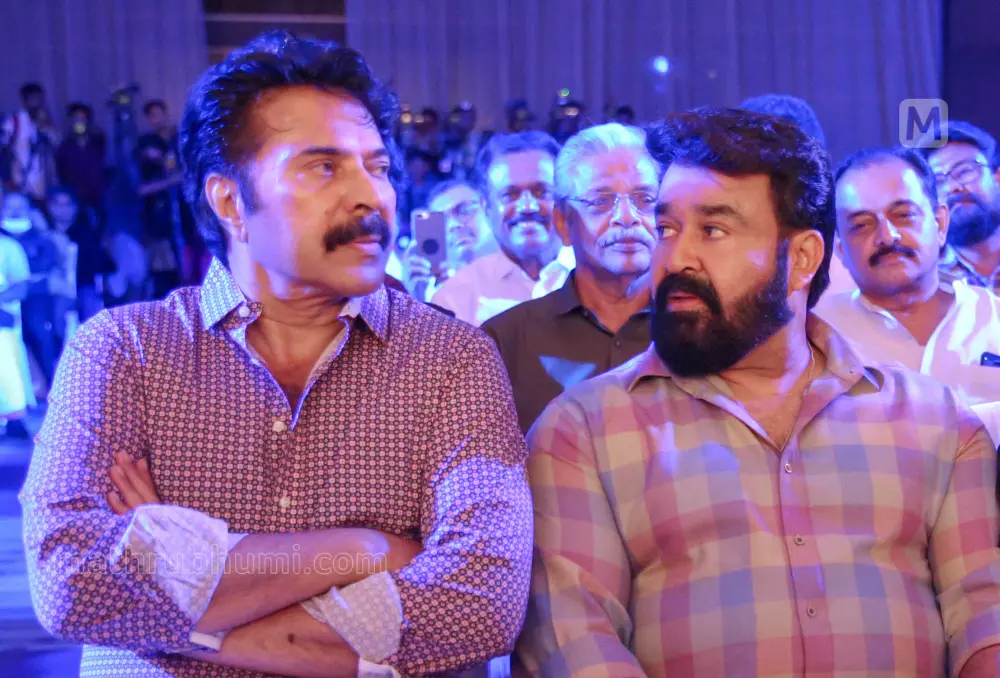
It’s remarkable how a 70-plus superstar like Mammootty, who was once famously selective about interviews, has embraced today’s new-age promotional format. For decades, he guarded his off-screen presence with a seriousness that matched his larger-than-life image. The few interviews he granted were often sharp, insightful, and tinged with gravitas, and watching him in those rare moments of reflection, mining lessons from his craft and life, was as rewarding as watching him on screen. He carried the aura of someone who didn’t need validation or overexposure to prove his stardom. But post-2021, though, there’s been a shift. Mammootty now sits alongside co-stars half his age, matching their vibe, cracking self-deprecating jokes, and even indulging star-struck hosts—moments that often go viral. This lighter, more accessible side is a surprising contrast to his guarded image. He’s not without quirks; in group interviews, he sometimes cuts in, and his awestruck colleagues rarely push back. But what makes him enduring is that, even in these casual settings, he remains honest about his journey, unafraid to laugh at himself, and is consistently humble about his craft. Perhaps the reason why it works is that it adds new layers to his public persona without diluting the mystique that made him a superstar in the first place.
In sharp contrast to Mammootty’s evolving public persona, Mohanlal has remained largely unchanged over the decades. He has always been perennially shy and reserved, and that streak of reticence continues. Even today, he tends to sidestep probing questions and offers only glimpses—never a full picture—of how his craft works. There’s an almost deliberate self-evasiveness to the way he approaches interviews, as though the mystery surrounding his artistry is better left intact. But very rarely has he unveiled his playful side, as he briefly did in an Empuraan promotional chat with a Tamil influencer. Mohanlal, like Sridevi, belongs to that rare breed of actors who can electrify the screen but remain unusually quiet, even to the point of being labelled “boring” off-screen. Yet Mohanlal has a knack for casually flexing his extraordinary filmography without ever sounding boastful, a quality that makes him deceptively humble.
Suresh Gopi in interviews often veers into deeply emotional territory, unafraid to get personal or even a touch dramatic. There’s an almost theatrical vulnerability in the way he speaks, as though every emotion is turned up just a notch higher than expected. His off-screen candour and tendency to wear his heart on his sleeve can feel like an extension of the fiery, no-nonsense cops and crusaders he’s best known for on screen.
Prithviraj Sukumaran, meanwhile, never misses a beat in interviews. Supremely confident—sometimes to the point of cockiness—he’s the kind of actor who will take on any question head-on, never dodging or deflecting. While doing so, he masterfully slips into promotion mode, generously plugging his projects, casually name-dropping, and reminding you of his wide network of industry connections. Because he’s so articulate and assured that this self-marketing often comes across as learned and well-informed, adding to his cultivated image as one of Malayalam cinema’s most media-savvy stars.
Fahadh Faasil, much like Mohanlal, keeps things intensely self-evasive. He has mastered the art of subtly playing down his accolades and achievements, often to the point of sounding almost detached from them. It’s an attempt to come across as humble, though at times it veers into the territory of humble-bragging—a quiet acknowledgment of his brilliance masked by self-deprecation.
Dulquer Salmaan, on the other hand, has carved out an off-screen persona markedly different from his father’s. Unlike Mammootty’s occasional bluntness, Dulquer is relentlessly polite, diplomatic, and almost allergic to controversy. He chooses his words carefully, projecting the kind of agreeable charm that makes him universally likable, even if it occasionally feels overly cautious. Ditto for Nivin Pauly.
Tovino Thomas adopts a similar cloak of humility, often projecting himself as grounded and self-effacing. But now and then, the mask slips—usually when he discusses his process or reflects on his place in the industry—and you catch flashes of the pride and ambition underneath.
When it comes to female actors in Malayalam cinema, one has to concede that the stakes of speaking one’s mind are far higher. In an industry that can be relentlessly critical—even punitive—towards women who deviate from the agreeable template, it’s unsurprising that most prefer to keep things safe. Beyond Parvathy Thiruvothu and Urvashi, the rest—including Manju Warrier—tend to remain cautious, offering pleasant, controversy-free sound bites designed to keep everyone comfortable.
Parvathy, when she first entered the scene, had an almost refreshing and radical candour. It pushed back against a culture that often sidelines women’s voices. She was articulate, fearless, and unafraid to take on the entrenched hierarchies of the industry. But over time, some of that freshness dulled; her interviews began to feel more self-referential, as though her outspoken persona had become her brand. It’s not that her opinions lost value, but there’s a sense that she is increasingly preoccupied with herself in the telling.
Rima Kallingal, by contrast, comes across as a far more organic speaker. She doesn’t sound rehearsed, nor does she appear to be performing an identity. Her thoughts feel rooted in lived experience rather than theory, and she has a knack for balancing honesty with nuance.
Urvashi, of course, has always been in a league of her own—her interviews laced with wit, blunt humour, and a total disregard for industry niceties. But she is an outlier, a veteran whose sharpness has long been part of her appeal. For younger women navigating a far more unforgiving ecosystem, the safer route is to stick to pleasantries and politeness, even if it means leaving audiences with a frustrating sameness across interviews.
So these modern promotional interviews double as mirrors, reflecting the shifting dynamics of stardom, and how adaptable (or resistant) our actors are to the democratized, influencer-led media landscape, and how much of themselves they’re willing to reveal when they aren’t playing a role.