EXCLUSIVEKharge’s Diwali remark gives BJP a political opening ahead of UP polls
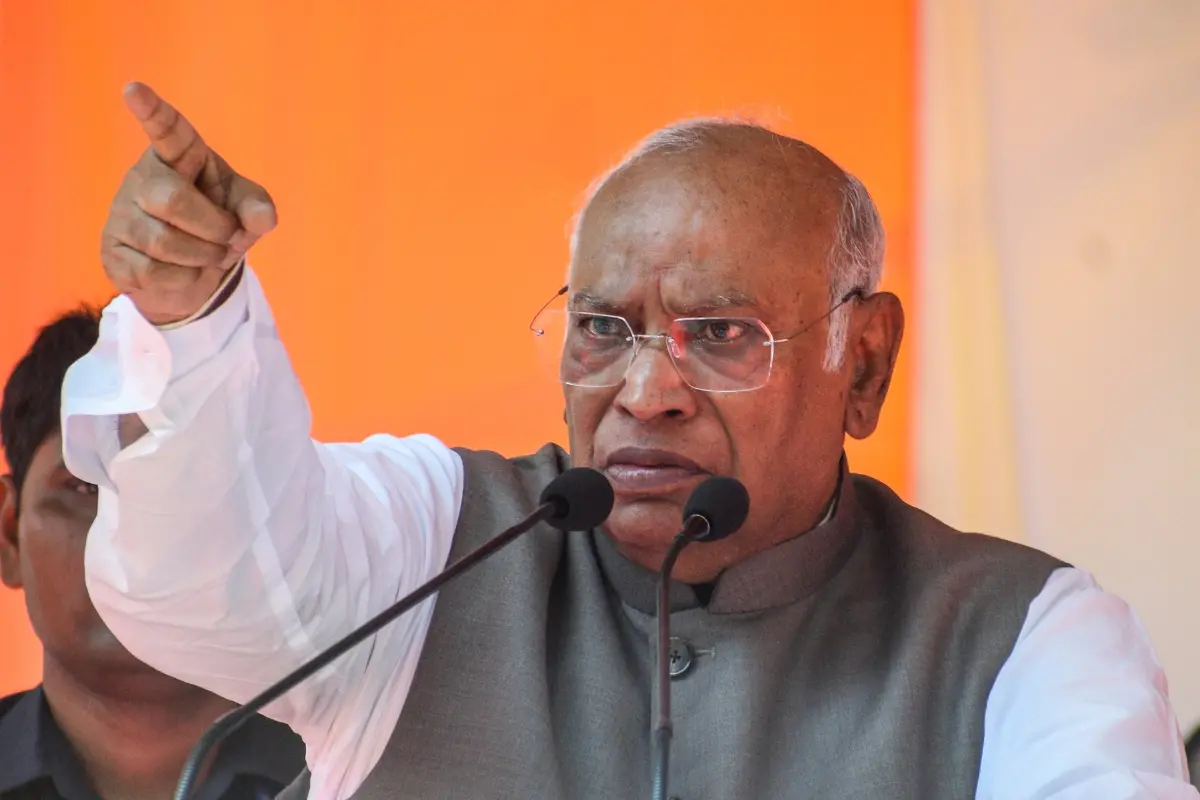
New Delhi: Congress has a history of handing BJP political opportunities at crucial moments through ill-judged remarks. Party president Mallikarjun Kharge’s recent description of Diwali as “khushiyon ka Eid” could well prove to be one such gift to BJP, as the stakes extend well beyond next year’s assembly elections in Uttar Pradesh to the 2029 Lok Sabha battle.
To borrow a cricket analogy, Kharge has served up a loose ball that a desperate, run-hungry batsman can send soaring over the boundary in an otherwise low-scoring match. Using a Muslim festival to define the most important Hindu festival in north India is unwarranted and appears completely out of place. At a time when the opposition is hoping to exploit the governing party’s vulnerabilities, such a remark is hardly an exercise in realpolitik, particularly when the Hindi heartland has acquired a deep Hindutva hue over the past decade.
Diwali is associated with Lord Ram’s return to Ayodhya after 14 years of exile, following his victory over Ravan. Congress strategists need to understand that in a state which was the epicentre of the Ram Janmabhoomi movement, large sections of Hindu voters could find Diwali’s association with Eid offensive. And ever eager to nail Congress for “appeasement politics”, BJP, led by CM Yogi Adityanath, is desperately looking for such missteps that it can use to polarise voters along communal lines and salvage its position in this politically sensitive state.
Development Hard To Sell
One needs to go back two decades to understand why Congress functionaries must weigh their words while taking on BJP in electoral battles shaped by the saffron brigade. The year was 2007. Narendra Modi, then CM of Gujarat, was facing the electorate for the second time. But the winter of 2007 was starkly different from 2002, when BJP had romped home with 127 seats in the 182-member assembly. Held nine months after the killing of kar sevaks in the Godhra train burning, which triggered Gujarat’s worst riots, the 2002 polls had been relatively smooth sailing for Modi, with communal scars still fresh in a deeply polarised state.
By 2007, Modi was facing six years of anti-incumbency. Having aggressively pursued industrial investment and infrastructure growth between 2002 and 2007, which formed the core of his Gujarat Model, Modi made development the centrepiece of his campaign for a second term. However, while the communally charged atmosphere had made the 2002 election relatively easy for him, BJP found during the initial campaign rallies in 2007 that selling development was not quite as easy, despite the state government's achievements. A senior Gujarat journalist who has tracked Modi’s rise over the past 25 years recalls those rallies: “The issue did not cut much ice with voters. It was like a cricket match where the batsman was unable to score runs.”
Maut Ka Saudagar Blunder
Resistance from within BJP had added to Modi’s woes. The Vajpayee camp, in particular, was not favourably inclined towards him, still upset over its failure to remove Modi as CM at BJP’s national executive meeting in Goa following the 2002 riots. Besides, his rise at the time threatened to overshadow several senior central BJP functionaries, including Sushma Swaraj and Rajnath Singh.
However, one Congress misstep changed the electoral game in Gujarat. At a rally, then Congress president Sonia Gandhi took a jibe at Modi, calling him a “maut ka saudagar” (merchant of death) over the post-Godhra riots. That one remark changed the course of the election. Modi projected it as an attack on Gujarati “asmita” (pride) and an insult to the people of the state. The remark shifted the campaign narrative and helped BJP mobilise Hindu voters. The party sailed through comfortably, winning 117 seats. Some Congress functionaries privately admitted that the remark had been a blunder. BJP had initially appeared to be faltering, but Sonia’s remark gave its campaign a fresh lease of life.
Politics Around Hindutva
Nearly two decades later, in an India far more polarised than before, Congress functionaries need to tread carefully. Any attempt to showcase the party’s secular credentials that appears artificial rather than spontaneous is bound to backfire and cause considerable damage. Secularism is a natural virtue. But it cannot be forced. Describing Diwali as “khushiyon ka Eid” is bound to irritate, if not offend, Hindu supporters of Congress. BJP is not on strong ground in UP or neighbouring Uttarakhand. Its functionaries are precisely looking for opportunities to use such statements to change the political narrative in two states where Hindutva has occupied centre stage since Modi’s rise at the Centre.
A reinvigorated Congress has found its mojo, thanks to Rahul Gandhi’s engagement with Gen Z and his attacks on BJP over paper leaks and SIR. But these two issues alone are unlikely to be enough to win elections in UP and Uttarakhand. Congress needs Hindu support to sustain the momentum Rahul has built through his attacks on the Centre over the past five months.
BJP On Sticky Wicket
The political landscape in UP offers the Samajwadi Party-Congress combine an opportunity to mount a formidable challenge to Yogi’s 10-year-old government. Several factors are working in its favour. The Hindu vote bank is showing signs of division following the UGC regulations, which were stayed by the Supreme Court after a nationwide backlash from upper-caste groups. Many among these groups see the regulations as an attempt by BJP-led Union government to appease OBCs and Dalits and have been voicing their anger, vowing to teach the party a lesson. Brahmins, accounting for over 10% of the electorate and forming the largest section of upper-caste voters in UP, feel sidelined under Yogi’s tenure. Thakurs, the caste to which Yogi belongs, account for the second-largest section of upper-caste voters, with a share of around 7-8%.
Besides, the issue of donation theft at Ram Mandir in Ayodhya has put BJP on the back foot, denting its credentials as the party championing the Hindutva cause. SP-Congress combine has seized the opportunity, aggressively attacking BJP over “chanda chori” in the abode of Ram Lalla.
Against this backdrop, Congress and SP functionaries need to ensure that their remarks are not construed as evidence of an opposition agenda rooted in “appeasement politics”. Such statements can not only derail and divert the campaign from the opposition’s attacks on the ruling dispensation but also undermine its efforts to woo large sections of Hindu voters. They give BJP an opportunity to revive the bogey of Muslim appeasement and shift the electoral narrative towards consolidating the Hindu vote bank. Communal polarisation has repeatedly worked to BJP’s advantage in elections. In the current context, it could also blur the divide between upper castes and Dalits-OBCs, a social divide that Congress and SP hope to turn to their advantage.
BJP’s Anti-Sanatan Charge
BJP’s reaction to Kharge’s remark was swift and aggressive. Party spokesperson Gaurav Bhatia accused Kharge of hurting Hindu sentiments and said Congress was born with a DNA of “blatant appeasement”. Union minister Giriraj Singh said Kharge’s description of the festival of lights reflected Congress’s anti-Sanatan mindset.
BJP has repeatedly demonstrated its ability to turn the tide in an apparently unfavourable election by seizing on remarks made by its opponents. For Congress, Kharge’s Diwali remark is a reminder that political battles are not always lost through a lack of ammunition. Sometimes, they are lost by handing the opponent precisely the weapon it needs.
In a state where the opposition is beginning to sense an electoral opening, Congress can ill afford to provide BJP with such an easy opportunity to change the narrative. The challenge for Congress is not merely to take on BJP’s Hindutva politics, but to do so without allowing the saffron party to portray it as being at odds with Hindu sentiment.