Beyond Cynicism: Kerala 2.0 - A blueprint for bold reform
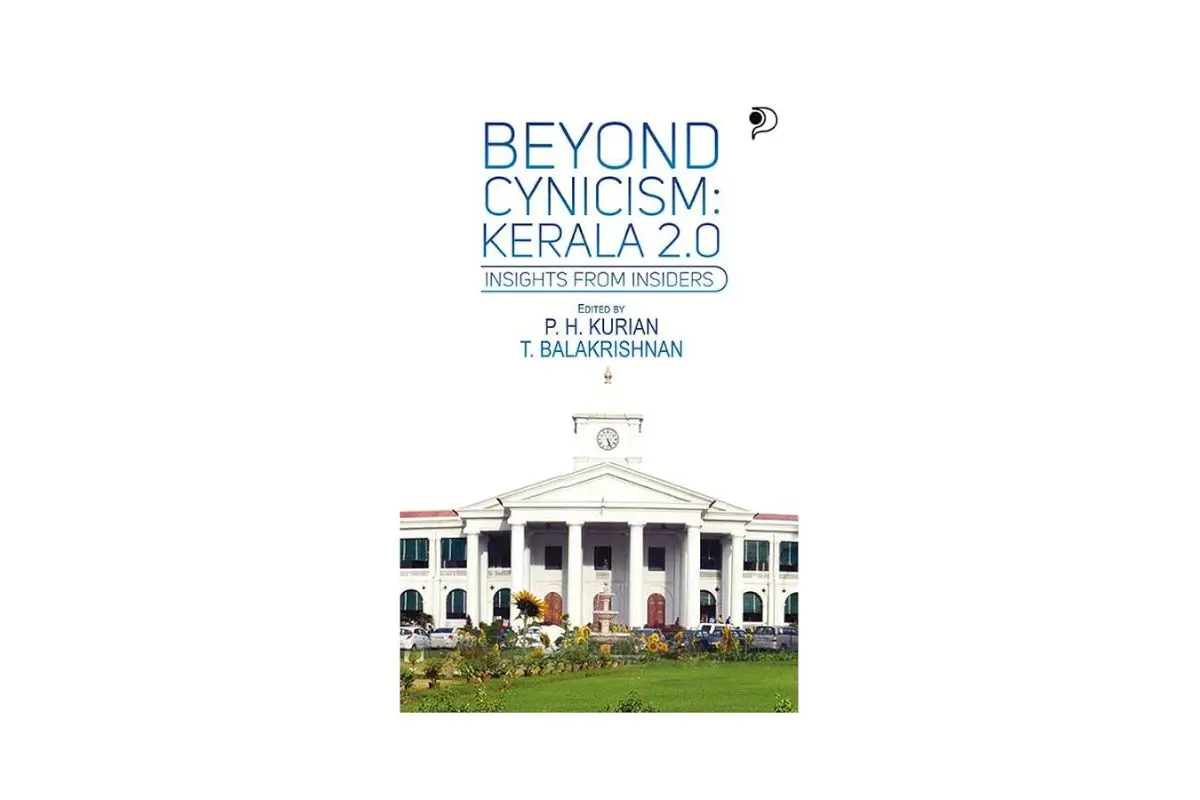
The new book, 'Beyond Cynicism: Kerala 2.0', is not just another policy compendium or bureaucratic memoir. It is a bold, clear-eyed and deeply informed call to action - one that I wholeheartedly endorse. Edited by P H Kurian and T Balakrishnan, both former Additional Chief Secretaries to the Kerala government, this collection of 21 essays by serving and retired IAS and IPS officers of the Kerala cadre is a rare and urgent intervention. It is a book that dares to diagnose Kerala's systemic dysfunctions and prescribes the kind of radical reforms that most politicians and policymakers shy away from. What makes this book compelling is not just the depth of its analysis, but the credibility of its authors. These are not ivory-tower theorists or detached commentators. They are seasoned administrators who have worked within the system, often pushing against its inertia. This is an intervention written not by armchair critics, but by the architects (and occasional dissidents) of the very system they diagnose, which lends it an unassailable authority. Kurian, for instance, famously denied a patent to Novartis in 2006, enabling public access to affordable cancer medication. Balakrishnan helped reimagine Kerala's governance, often by challenging bureaucratic orthodoxy.Their insider perspective lends the book both authority and urgency.
The book's central thesis is unflinching: Kerala is economically stagnant, fiscally overstretched, agriculturally weak and industrially anaemic. This is not hyperbole. The state's youth are leaving in droves for education and employment abroad, while unskilled labour from poorer Indian states fills the vacuum at home. The paradox is painful and telling. The contributors do not wallow in despair, however. Instead, they offer a roadmap (sometimes uneven, but always earnest) for structural transformation. Amitabh Kant, who reinvented Kerala's tourism brand and went on to helm Niti Aayog, delivers one of the most provocative essays, arguing that Kerala's economic model is trapped in outdated welfarism. Both the CPI(M)- led Left and the Congress-led UDF, he contends, have fostered a culture of entitlement at the expense of enterprise. Kant's call for a 'radical reform' of Kerala's economic paradigm is not just timely, but essential. He writes, 'The Kerala government's processes and procedures have become bottlenecks. The mindset must shift - from viewing the market as a threat to recognising it as a vital engine for economic development.' This is a challenge that few in Kerala's political class have had the courage to embrace.Ajit Kumar (IAS 2006) proposes the Capital Regional Development Project for Thiruvananthapuram as a pilot model, leveraging Kerala's unique urban-rural continuum. But as he points out, enabling legislation like the Special Investment Region Act remains stuck in limbo, a symptom of the policy paralysis that afflicts the state. This is a recurring theme throughout the book: Kerala does not suffer from a lack of ideas, but from a chronic failure to execute them.
Digital governance, once a Kerala success story, is also scrutinised. Alkesh Kumar Sharma (IAS 1990) acknowledges the pioneering Akshaya Kendras but warns of a growing digital divide. Dr B Ashok (IAS 1998) goes further, advocating for user-fee models in education and healthcare based on ability to pay - a proposal that challenges Kerala's long-standing but increasingly unsustainable commitment to 'free' services. One of the most insightful contributions comes from bureaucrat-turned- N-official and political candidate MP Joseph, who unpacks Kerala's
migration paradox: the simultaneous exodus of educated Keralites and the influx of migrant workers from other Indian states. This dual movement reflects both aspiration and stagnation - a desire to escape and a failure to provide opportunity at home. Other essays address equally pressing but often overlooked issues.Lida Jacob highlights the gap between Kerala's social development and its lagging gender parity. Dr KB Valsala Kumari makes a compelling case for a circular economy to combat plastic waste. S Subbiah urges the state to tap into its underutilised mineral wealth, while Dr V. Venu calls for liberalising Kerala's archaic excise regime - a move that could boost revenue and reduce illicit trade. (Venu's post-retirement work in promoting Kerala's culture through the Kochi Biennale and the Mathrubhumi LitFest in my own constituency, speaks volumes about his continuing commitment.) The book does not ignore the foundational role of governance and security. Jacob Punnoose (former DGP) and Rajan Medhekar (ex-NSG DG) remind us that law and order is not just a policing issue but a prerequisite for development. P C Cyriac, drawing on his experience in Tamil Nadu, advocates for bureaucratic courage and common sense over blind adherence to precedent. Former Cabinet Secretary KM Chandrasekhar offers a case study in what is possible when political consensus and bureaucratic resolve align. His account of the Vizhinjam Port project - a long-delayed dream finally realised, and in which I played a part myself - is a testament to what a 'Kerala-first' approach can achieve. Dr Jose Sebastian's essays are among the most grounded in fiscal realism. He warns that the size of the state government is unsustainable, calls for rationalising the pension system, and highlights Kerala's dismal tax compliance. His proposal to cap pensions and redirect the savings to the unprotected is both equitable and provocative - it's precisely the kind of hard truth Kerala needs to confront. The final six essays by Kurian and Balakrishnan are the book's most audacious. They propose dismantling some of Kerala's most sacrosanct policies: the Land Reforms Act, the Headload Workers Act, and the Paddy and Wetland Conservation Act. They argue for monetising government land, is investing in loss-making public sector units, and slashing bureaucratic red tape.
These are not incremental tweaks. They are tectonic shifts. And yes, they are politically explosive. In a state where even widening highways beyond 30 metres was once a bipartisan taboo, such proposals will test not only political will but also public imagination. Yet the editors do not flinch. They understand that meaningful change will be painful, unpopular, and fiercely resisted. But they also know that the cost of inaction is far greater. To its credit, 'Beyond Cynicism' does not sugarcoat the challenges ahead. It is a 'warts-and-all' manifesto for a new Kerala - pragmatic, unsentimental, and unafraid to question sacred cows. The writing is refreshingly free of jargon, making it accessible to a wide audience. That said, the collection is not without flaws. Some essays cover familiar ground or repeat long-standing recommendations without offering clear implementation strategies. Some new ideas that, for instance, I have been advocating, like an Investors' Protection Act and a major regulatory overhaul, are missing. There is also a missed opportunity to delve deeper into the political economy amid our political realities and obvious constraints. How do we build consensus for reform, or dismantle entrenched resistance?
Despite these shortcomings, the book's cumulative impact is powerful. It serves as a manual for aspiring civil servants, a provocation for policymakers, and a wake-up call for citizens. It argues convincingly that Kerala's greatest threat is not poverty or inequality, but the complacency bred by policy inertia and ideological rigidity, with self-interest wrapped in self-righteousness.'
This is a book that deserves to be read not just in bureaucratic circles but by anyone who cares about Kerala's future. If it can spark public debate, challenge political orthodoxy, or inspire even partial adoption of its ideas, it will have done its job. 'Beyond Cynicism: Kerala 2.0' lives up to its name. It dares to hope, not naively, but with eyes wide open to the price of change. And that,
in today's climate, is nothing short of revolutionary. I hope it is widely read by everyone in the policy space who is at all concerned about Kerala.