A speech I didn’t make: The Indian Ports Bill, 2025
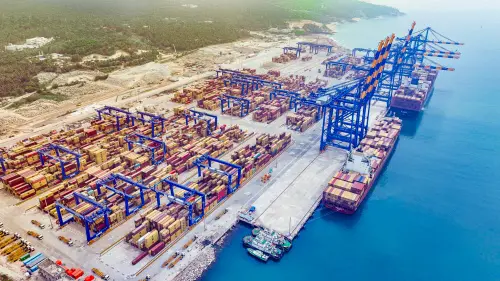
Thanks to the disruption of the Lok Sabha, I was unable to speak in response to the Indian Ports Bill, 2025, which passed without debate. This was a pity, since this legislation encroaches upon the powers of the States and undermines our federalism by tampering with the distribution of powers between the Union and the State governments, as defined in the 7th Schedule of the Constitution. But the issues with this bill don’t end there: it falls short of legislators’ expectations and seafarers’ aspirations. This article is a brief summary of the arguments I was planning to make at greater length, had I spoken in the Lok Sabha as planned.
Since the Opposition is often accused of opposing for the sake of opposing, let me reassure readers that I find myself in agreement with the rationale for this Bill. The Indian Ports Bill, 2025, rewrites decades of port legislation into a single national framework—seeking to modernise and replace the outdated Indian Ports Act of 1908. It is imperative that the 117-year-old Act be revamped to reflect present-day frameworks, incorporate India’s international obligations, address emerging environmental concerns, and aid the consultative development of the ports sector in the national interest. I have been one of the most vocal and staunch supporters of the development of Kerala’s port sector—advocating tirelessly for the Vizhinjam port, which was inaugurated on May 2nd of this year. But though the Bill aims to “consolidate the law relating to ports, promote integrated port development, enhance ease of doing business” in the maritime sector, which aligns completely with my vision for India’s maritime ecosystem, it fails to grasp the true nature of India’s maritime potential.
The first problem is that the Bill’s architecture, with a National Ports Development Council and binding “national perspective” plans, overrides the constitutional balance between the Centre and the States. The new Bill explicitly empowers the Central Government to declare new ports or alter port limits and to set nationwide port policies. In practice, any state law or policy on ports that conflicts with the national Bill would be invalid under Article 254 (parliamentary law prevails on concurrent subjects). This strips the coastal states, including my own (Kerala), of their authority over their ports, reducing them to administrators of a centrally dictated agenda. A new obligation regarding stakeholders has been added—”any significant change in a port’s ownership or control must have prior central approval”. This may spell disaster, since many coastal states have historically preferred state-led port growth. Some chambers of commerce have voiced that local business interests might suffer if power shifts away from states.
But the woes don’t end here. The Bill forgets the human beings who use our ports—the crew, the seafarers. The Bill has no provision for crew change facilities. Vessels that do not normally dock at Indian ports come to Vizhinjam port, for instance, for crew change due to its proximity to international shipping channels, benefiting not just the State using direct and indirect revenue, but also facilitating “ease of business”, which the Bill promises. I had petitioned the Directorate-General of Shipping (DGS) against the discontinuation of the crew change facility at the Vizhinjam seaport, which has not only been beneficial to transcontinental shipping companies operating ships through nearby routes but has also stimulated the local economy by creating additional jobs. Crew changes support the state's travel, tourism and hospitality sectors, and help the port earn revenue by way of port dues, outer anchorage, channel fees, vehicle entry and tug hire charges. Further, many of the ships that dock at Vizhinjam are unable to do so elsewhere, given the low draft conditions in many of India's existing ports. The lack of any provision in the Bill regarding crew change facilities at ports like Vizhinjaam is glaring.
There is no mention of tourism at all in the bill. So it omits a very pressing issue: customs clearances. Though the Vizhinjam International Seaport has launched commercial operations and handled over four lakh Twenty-foot Equivalent Units (TEUs) of cargo by facilitating the berthing of over 200 ships, the absence of a dedicated immigration check-post (ICP) at Vizhinjam is posing severe challenges to the shipping lines that call at the seaport. The Bill, however, makes no mention of ports dealing with customs clearance problems, a missed opportunity for a bill that promises the best interests and development of the port sector in the country. Though transhipment container volumes are being transferred from Colombo to Vizhinjam, the absence of an ICP at Vizhinjam has become a major operational barrier, creating challenges not encountered at other ports in India. For instance, though most international carrier vessels have mixed-nationality crews, vessels with Pakistani crew members are not permitted to call at the port, since they can’t be processed -- thereby forcing the lines to cancel their calls at Vizhinjam, which significantly impacts planning, container volumes, and the consistency of service patterns at the port.
As MP, I urge that the ICP status for Vizhinjam port needs to be granted at the earliest. Although operational, Vizhinjam lacks on-site Customs officers, forcing exporters to begin manual clearance with Thiruvananthapuram Customs four days in advance. That office must then forward vessel arrival documents to Cochin Customs for approval, causing delays or sudden diversions when Cochin officers are unavailable. The Bill overlooks the need for measures to streamline ICP notifications for busy “non-major” ports like Vizhinjam. Such omissions not only facilitate drug smuggling but risk admitting security threats, since these ports lack connectivity to Delhi’s centralized immigration system. The Bill should have mandated coordinated guidelines among the MHA, state governments, and port authorities to ensure all seaports are both business-friendly and secure.
The Bill proudly also boasts the establishment of a Council (MSDC) to help plan and implement Indian maritime development—but there’s not a single representative of the Home Ministry, or Ministry of Environment, Forest and Climate Change, or even the State Department of Environment or Planning on the MSDC Council. Nor is there any private-sector representation. And even more curiously, there are no representatives of the Sagarmala Programme on the Council either—even though the Ports Bill builds exclusively on the government’s Sagarmala program (initiated in 2015) to spur port‑led development.
The Bill significantly tightens the penalty regime for offences, yet does not provide a mechanism for appeal. Under the Bill, port officers, such as the conservator and the health officer, are granted extensive powers of entry, inspection, penalisation and adjudication – with no safeguards at all against the possible misuse of such powers!
Let’s not forget that a 2011 World Bank Report, ‘Regulation of the Indian Port Sector’, observed that “non-major” ports are perceived as “more business-oriented, customer-friendly, cheaper and in general more efficient” whereas “unnecessary regulatory and financial burdens are imposed upon Port Trusts, private terminal operators and investors” by the Central government. The Bill has missed an opportunity to remedy this by supporting “non-major” ports. India’s maritime capacity, though expanding, still remains woefully inadequate, especially when juxtaposed against China’s extraordinary growth. While China handled over 330 million TEUs (twenty-foot equivalent units) in 2025, India managed only a mere 20 million—a stark reminder that we are failing drastically short of realising our full potential.
There are so many ports in our country—even in my own state—that remain underutilised, unable to live up to their full potential. Vizhinjam, with its deep natural draft, is ideally positioned to attract large transshipment vessels, offering an alternative to Colombo, Dubai, Singapore, and Tanjung Pelapas. Vallarpadam port in Kochi remains indispensable as a gateway port for southern India, catering to coastal and hinterland cargo, as well as mainline international services. Together, these ports can dramatically expand India’s limited cargo handling capacity, placing India at the forefront of maritime growth.
The Bill also missed a chance to create a framework to fund local infrastructure, skilling, or health programmes, such as by requiring ports to contribute a share of their revenue or profits to surrounding communities as part of their Corporate Social Responsibility. A maritime vision like this cannot simply exist in isolation—the development of port infrastructure in India depends on bold reforms that cut across infrastructure, labour and policy frameworks—which is something that this Bill has failed to do.
As a supporter of ports-led development, I really wanted this Bill. I wanted it to be imaginative and innovative—but, instead of sailing triumphantly on the high seas, we have been left high and dry. As I have explained, the Bill finds itself trapped between the Devil and the deep blue sea. But instead of returning it to its anchorage, it has been bulldozed through with no debate. I urge the Minister to withdraw the Bill before it is too late and revise it along the lines I have suggested. India deserves the best ports law we can get. This is not it.