How NRIs won a landmark legal battle for equality at Calicut airport
On 26 November 1949, the people of India gave themselves a Constitution founded on a promise of equal citizenship and equal justice. Article 14 gives that promise its enduring legal expression:
“The State shall not deny to any person equality before the law or the equal protection of the laws within the territory of India.”
The choice of words is deliberate. The guarantee extends to “any person”. Residence abroad does not diminish its protection against State action within India. Nor does the description “non-resident” place an Indian beyond the constitutional safeguards available to those who remain at home.
In 1997, that principle lay at the heart of the challenge we brought at Musthafa & Almana on behalf of the Calicut Airport Users Forum. The immediate dispute concerned a levy of Rs. 500 on departing international passengers. The constitutional question was considerably larger: could the State impose the burden of a common public facility upon a selected category of its users, without sufficient justification or lawful authority?
The burden on departing international passengers
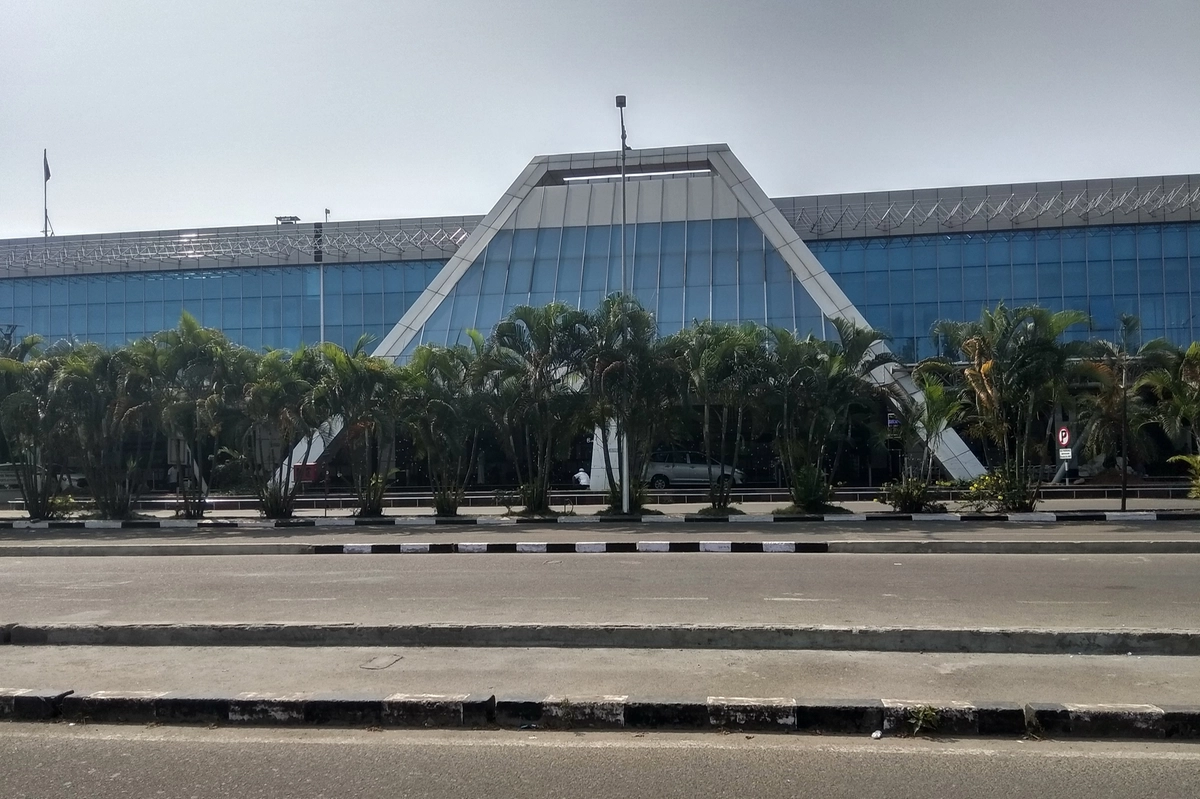
From 1995, international passengers embarking at Calicut were required to pay a Development User’s Additional Fee of Rs. 500. The proceeds went to the Malabar International Airports Development Society (MIADS) to meet interest on borrowing for the runway extension. Domestic passengers bore no corresponding charge. Neither did arriving passengers. The burden fell exclusively on those departing internationally, among them the Gulf workers whose earnings sustained households across Malabar.
The charge was payable on every international departure. For workers returning to their employment in the Gulf, it was a recurring demand imposed at the point of leaving home, towards a runway serving the airport as a whole.
How the challenge began
The challenge arose from mounting concern among NRIs over a levy imposed exclusively on international passengers departing from Calicut. Our initial approach was cautious: the collection might have had a statutory basis, and its legality required examination. A detailed study raised substantial questions about both the authority to collect the fee and the justification for imposing it upon only one category of passengers. Those concerns led to the formation of the Calicut Airport Users Forum and the institution of proceedings before the High Court of Kerala.
A collective challenge under Article 226
The campaign required sustained work within the expatriate community as well as a considered strategy before the Court. In leading that effort and conducting the litigation, I sought to place the continuing grievance of departing international passengers before the High Court in a form that would justify immediate intervention.
As counsel for the Calicut Airport Users Forum, I approached the challenge as a continuing injury to international passengers departing from Calicut. Through Musthafa & Almana, we instituted O.P. No. 16497 of 1997 before the High Court of Kerala. An individual passenger, C.K. Ayamu, had already challenged the levy. As I recall those proceedings, interim relief had not been granted because he had completed his journey after paying the fee; no immediate threat to him remained.
Our submission was that the completion of an individual passenger’s journey could not determine the need for interim relief in a representative petition. The collection continued each day, affecting successive international passengers departing from Calicut. The Court was therefore being asked to restrain a recurring imposition upon the constituency represented by the Forum, whose grievance remained immediate notwithstanding the completion of any one member’s journey.
The Forum invoked the High Court’s jurisdiction under Article 226 of the Constitution. That provision empowers High Courts to issue directions, orders and writs for the enforcement of fundamental rights and for other legal purposes. It enabled us to place both the claim to equality under Article 14 and the objection to the authority for the levy before the Court, and to seek an immediate restraint on collection. The expatriate community had organised itself to pursue constitutional relief against a continuing grievance at home.
The strategy was to bring a dispersed but common grievance before the Court through a representative body. In its collective purpose, the challenge bore an affinity to class-action litigation in the United States, although it proceeded within India’s constitutional writ jurisdiction. We sought no individual compensation. The relief was directed at the source of the injury: stopping an unlawful collection that affected successive passengers every day.
An individual payment might appear too modest to justify litigation. Its repeated collection from thousands of passengers presented a substantial question of public accountability. The practical difficulty of an individual challenge could not be allowed to insulate the levy from judicial scrutiny.
Equality and the authority to levy
Our challenge rested on equality and lawful authority. Under Article 14, we questioned both the selective burden within Calicut airport and the differential treatment of its passengers when airport development elsewhere was being undertaken without an equivalent levy. If the runway was a common facility, what justified selecting departing international passengers alone to finance it?
Justice V.R. Krishna Iyer expressed the essential caution in his concurring opinion in State of Jammu & Kashmir v. Triloki Nath Khosa, (1974) 1 SCC 19: “To overdo classification is to undo equality.” Article 14 permits reasonable classification, but the distinction must rest on an intelligible basis and bear a rational relationship to the object sought to be achieved. The Constitution Bench reiterated that test in D.S. Nakara v. Union of India, (1983) 1 SCC 305.
We also invoked Article 265, which declares:
“No tax shall be levied or collected except by authority of law.”
Alongside this constitutional ground, we challenged the statutory foundation of the collection. The authority to impose a charge had to be found in law. Government approval could not confer upon MIADS a power the statute had not vested in it.
The interim stay and the subsequent KMCC petitions
Justice P.K. Balasubramanyan granted an interim stay of collection in the Calicut Airport Users Forum’s petition, O.P. No. 16497 of 1997. I remember the relief with which the order was received across the Gulf. Passengers who had repeatedly paid the levy as a condition of departure could now see that their collective grievance was capable of obtaining immediate judicial protection.
The interim order marked a turning point in the campaign. After the Forum secured the stay, two established voluntary organisations came forward and engaged me to institute separate writ petitions on the same subject, with each organisation as petitioner in its own right.
Kozhikode District KMCC, Sharjah, filed O.P. No. 22782 of 1997. The KMCC UAE Central Committee filed a separate writ petition in 1998. These were additional proceedings entrusted to me following the interim protection obtained in the Forum’s case.
Their participation strengthened the representative foundation of the litigation and reinforced its character as a genuine public grievance. Our central contention remained that international passengers departing from Calicut had been singled out to bear a levy that passengers departing from other Indian airports were not required to pay. The unequal burden arose solely because they travelled abroad through Calicut.
The judgment and its wider significance
On 1 July 1998, Justice K.A. Abdul Gafoor held the levy unauthorised and restrained MIADS from collecting it. Under the statutory provision then governing the charge, the Court distinguished runway facilities serving aircraft operators from amenities chargeable to passengers. MIADS itself possessed no statutory authority to levy the fee.
The judgment is generally reported under Ayamu’s name. That reporting title does not, however, convey the course of the campaign or the contribution of the organisations that pursued the grievance. The Forum’s separate proceedings, the interim protection secured through them and the subsequent KMCC petitions are essential to a proper account of the litigation.
MIADS appealed and obtained a stay, and collection resumed. The proceedings continued, as did the campaign against the levy. When the charge was reduced to Rs. 375 in 2001, our objection remained: a smaller unlawful levy is still unlawful. The eventual withdrawal of the fee brought practical relief. The significance of the challenge, however, extended beyond the amount saved by each passenger.
Justice Krishna Iyer and the substance of equality
Justice Krishna Iyer’s judgments offer a compelling account of why equality must be examined in its practical operation. In Moti Ram v. State of Madhya Pradesh, (1978) 4 SCC 47, a poor mason’s release on bail had been frustrated by an excessive surety requirement and the refusal to accept his brother as surety because he lived in another district. Krishna Iyer rejected both barriers and directed release on a personal bond. A financial condition readily satisfied by a person of means could deprive a poor person of the very liberty the bail order purported to grant.
In his opinion in Sunil Batra v. Delhi Administration, (1978) 4 SCC 494, he affirmed the continuing constitutional protection of prisoners against arbitrary and cruel treatment, drawing upon Articles 14, 19 and 21. His formulation was unforgettable: “Part III of the Constitution does not part company with the prisoner at the gates.”
The relevance of these decisions extends beyond the circumstances in which they arose. Constitutional protection must be effective wherever public power is exercised over the individual. In the Calicut litigation, the demand was made at an Indian airport under governmental authority. The passengers’ residence overseas could furnish no reason to diminish their entitlement to equal protection there.
There is also a personal Malabar connection. Justice Krishna Iyer began his practice at the Thalassery Bar and represented Thalassery in the legislature. Almana and I began our professional lives in those same courts. His jurisprudence gives that shared beginning a particular resonance: the law’s authority carries with it a responsibility to address grievances that ordinary people may lack the means, organisation or opportunity to pursue individually.
Collective action and constitutional equality
The larger significance of this litigation lies in the community’s collective invocation of Article 226. Passengers whose individual payments might never have justified the cost of proceedings acquired an organised means of seeking judicial protection. The Forum’s petition, followed by the two KMCC petitions after the interim stay, brought the continuing character and extent of the grievance before the Court. Their experience demonstrated the practical importance of constitutional remedies to Indians living abroad when public power was exercised over them in India.
For me, the Calicut Airport Users Forum’s challenge remains an expression of that responsibility, and an enduring chapter in the work of Musthafa & Almana. We brought before the Court a burden that had become routine precisely because it was dispersed among so many people. Collective representation enabled that burden to receive the scrutiny it deserved.
Today, I write from Dubai, among the community whose journeys gave this litigation its purpose. The case deserves remembrance for the principle it placed in issue: Indians who build their livelihoods abroad remain entitled to the full protection of the Constitution against unlawful State action at home.
“The society undertook the borrowing; departing international passengers were made to service its interest. Among them were Gulf workers earning modest wages, whose journeys sustained their families and much of Malabar’s economy. Airport development was a legitimate public aspiration. It could not confer upon a voluntary society the authority to transfer its financial obligations to a selected section of passengers. That was the injustice we challenged.”
Even beyond the departure gate, every person within India remains entitled to the Constitution’s guarantee of equality.
(The author is a sr lawyer, founder and chairman of Musthafa & Almana)