From Howrah Bridge to Aradhana: Remembering Shakti Samanta at 100
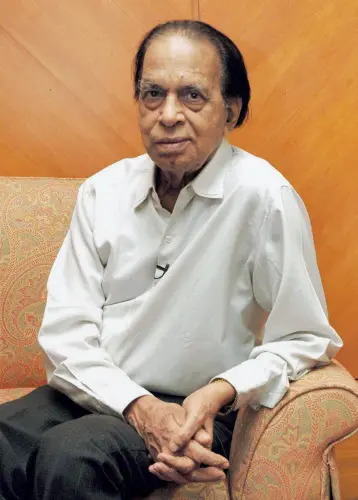
I first met Shakti Samanta when I was in school. I saw him as a slim, tall, very self-effacing shy young man who would often frequent the Shivaji Park residence of filmmaker Phani Majumdar in Mumbai. He began his career as assistant to Phani Majumdar in films like Aarti, etc. Often, when Phani Majumdar requested, he would stand in as prompter for amateur plays for Durga Pooja in Mumbai. No one saw him making a tantrum or throwing his weight about. He even did small cameos in the plays he would prompt for and no one gave him as much as a second glance. When he became an independent director, he remained his modest self, easily accessible to everyone who wanted to reach out. When one looks back at Hindi cinema from the 1950s to the 1970s, the name of Shakti Samanta and his production banner stand out alongside other big banners like B.R. and Yash Chopra, Manmohan Desai, Prakash Mehra etc.
With little money and big dreams, he took up the job of a school teacher in Dapoli, about 200 kilometers from Mumbai. He would make a weekly trip to Mumbai on Fridays, the weekly holiday in the Muslim-run institution he worked for. He made his rounds of the studios when Bombay Talkies was uppermost and as it turned out, Bombay Talkies at the time was overflowing with Bengalis.
He assisted Phani Majumdar for more than ten years before he could make his directorial debut with Bahu (1955) Usha Kiron, Karan Dewan, Pran and Shashikala. But the prints have disappeared into oblivion. His second film Inspector (1956) was a thriller with Ashok Kumar in the title role. It was a slickly made murder mystery, showing glimpses of Shakti-da’s flair for suspense thrillers. Sheroo and Hill Station followed. He set up his production house Shakti Samanta Films when he started work on Howrah Bridge (1958) starring Madhubala, Ashok Kumar and Madan Puri. It also featured Helen in the famous cabaret number mera naam chin chin chu sung by Geeta Dutt.
Madhubala’s lip-synching to Asha Bhonsale’s aaiye meherbaan remains a scene-stealer. The film established Shakti Samanta with command over entertainment that packed in brilliant music, dynamic action, chilling suspense, and a tight-knit script. Howrah Bridge was an instant hit. His next, Insaan Jaag Utha (1959) with Sunil Dutt and Madhubala was his first socially relevant film. It had a powerful storyline and beautiful songs such as mehenat kar insaan jaag utha. But the film was a flop. Shakti-da evolved his brand identity for wholesome, mainstream entertainment, churning out one hit after another such as Jaali Note (1960) with Dev Anand, Madhubala and Om Prakash.
“It was Ashok Kumar, then the top star at Bombay Talkies, who advised me to become an assistant director and not chase stardom,” he recalls. There were three films on the floors at that time and he would visit the sets and watch the shooting every Friday. During summer vacations, he began to assist Gyan Mukherjee, Satish Nigam and Phani Majumdar not even dreaming that one day, he would reach far beyond the horizons his predecessors had earlier defined. Over a distinguished career spanning 45 years, he directed 41 films, produced 27 and won several awards for his films and his contribution to cinema.
His second film Inspector (1956) was a thriller with Ashok Kumar in the title role. It was a slickly made murder mystery, showing glimpses of Shakti-da’s flair for suspense thrillers. Sheroo and Hill Station followed. He set up his production house Shakti Samanta Films when he started work on Howrah Bridge (1958) starring Madhubala, Ashok Kumar and Madan Puri. It also featured Helen in the famous cabaret number mera naam chin chin chu sung by Geeta Dutt. Madhubala’s lip-synching to Asha Bhonsale’s aaiye meherbaan remains a scene-stealer. The film established Shakti Samanta with command over entertainment that packed in brilliant music, dynamic action, chilling suspense, and a tight-knit script. Howrah Bridge was an instant hit. His next, Insaan Jaag Utha (1959) with Sunil Dutt and Madhubala was his first socially relevant film. It had a powerful storyline and beautiful songs such as mehenat kar insaan jaag utha. But the film was a flop. Shakti-da evolved his brand identity for wholesome, mainstream entertainment, churning out one hit after another such as Jaali Note (1960) with Dev Anand, Madhubala and Om Prakash.
When asked about his experience of having worked with Shakti-da, Shammi Kapoor, who played hero in some of his biggest hits, says, “He could be a very hard taskmaster. But he was always ready to experiment with shots, stories and characters. Though he was strict, he did not instill fear in his team and we had a friendly relationship with him. I worked with him for Singapore, China Town, Kashmir Ki Kali, An Evening in Paris, Pagla Kahin Ka and Jaane Anjaane. He was extremely versatile, offering something new with every film. Singapore was a frothy comedy, China Town was a thriller while Kashmir Ki Kali was a musical romance. An Evening in Paris was a travelling love story with suspense. The music in his films would be top-of-the-charts if you put them there. He was a complete filmmaker who understood the pulse of the audience.”
Shakti-da tied up with Shankar-Jaikishen as his music directors at the same time he tied up with Shammi Kapoor as his hero. The song number baar baar dekho in China Town was the first Indian song to be officially copied with due permission from a West Indies-based pop group and was shot abroad. When he was not working with Shammi Kapoor regularly, he made Naughty Boy, a full-blown comedy with Kishore Kumar, Sawan ki Ghata with Sharmila Tagore and Manoj Kumar and Aradhana, which changed the genre of filmmaking for Shakti Samanta and presented Sharmila Tagore in her first dramatic role.
“My first film under his direction was Pagla Kahin Ka,” says Asha Parekh. “He was a tough taskmaster and knew exactly how to extract the best out of his actors and his technical team. Thanks to Shakti-da, I have had the privilege of having worked with two top heroes spanning two generations of stars in the film industry. One of them is Shammi Kapoor and other is Rajesh Khanna,” she adds. Parekh won the Filmfare Award for Best Actress for Kati Patang.
The best phase in Shakti Samanta’s illustrious 50-year career began in 1969 with Aradhana. It marked the beginning of some of the best Hindi films ever made both commercially as well as in terms of slick and sophisticated productions. Aradhana heralded the industry’s great superstar Rajesh Khanna whose other release the same year was Raj Khosla’s Do Raaste, also a hit. It marked the longest tenure between Shakti-da and his actor. A long string of pairing between and among Rajesh Khanna, Shakti Samanta, Kishore Kumar, lyricist Anand Bakshi and the father-son music-composing duo S.D. Burman and Rahul Dev Burman followed. The films were Amar Prem, Kati Patang, Ajnabee, Anuraag, Awaaz, Kati Patang and Mehbooba. The Rajesh and Shakti-da parted ways after Alag Alag in 1985.
Shakti-da’s professional liaison with other actors worked the best with Uttam Kumar in two double-version hits Amanush and Anand Ashram, opposite Sharmila Tagore. His films with Amitabh Bachchan and Mithun Chakraborty did not jell. Two films with Sanjeev Kumar, Charitraheen and Ayyash flopped. The Bengali version of Barsaat Ki Ek Raat, namely Anusandhan did very well in West Bengal but the Hindi version failed to make it. He burnt his fingers with Devdas in Bengali and told me, “I will never work in Kolkata again, not because my film has flopped but because the work ethic here is very low, people are laid-back and lazy and at this age, I just cannot cope with the change.”
At a function to felicitate Shakti-da’s 50 years in films in Kolkata in 2008, Shakti-da said, “Perhaps the best phase my career began in 1969 with Aradhana. It marked the beginning of some of the best Hindi films made that were commercially successful and were also slick and sophisticated productions. Aradhana heralded the industry’s great superstar Rajesh Khanna whose other release the same year, Raj Khosla’s Do Raaste, was also a hit. It marked the longest tenure between my actor and myself.” A long string of pairing between and among Rajesh Khanna, Shakti Samanta, Kishore Kumar, lyricist Anand Bakshi and the father-son music-composing duo S.D. Burman and Rahul Dev Burman followed. The films were Amar Prem, Kati Patang, Ajnabee, Anuraag, Awaaz, Kati Patang and Mehbooba. The Rajesh and Shakti-da parted ways after Alag Alag in 1985.
I felt sad when I learnt that the only film personalities who turned up for his funeral in Mumbai following his sad demise in 2009 were filmmaker Yash Chopra, actress Moushumi Chatterjee and music director Annu Malik. The filmmaker who gifted Hindi mainstream cinema some of the most glamorous and talented actors, will remain archived in the hard disk of Indian mainstream cinema.