The black box would speak better than plumbers or pilots
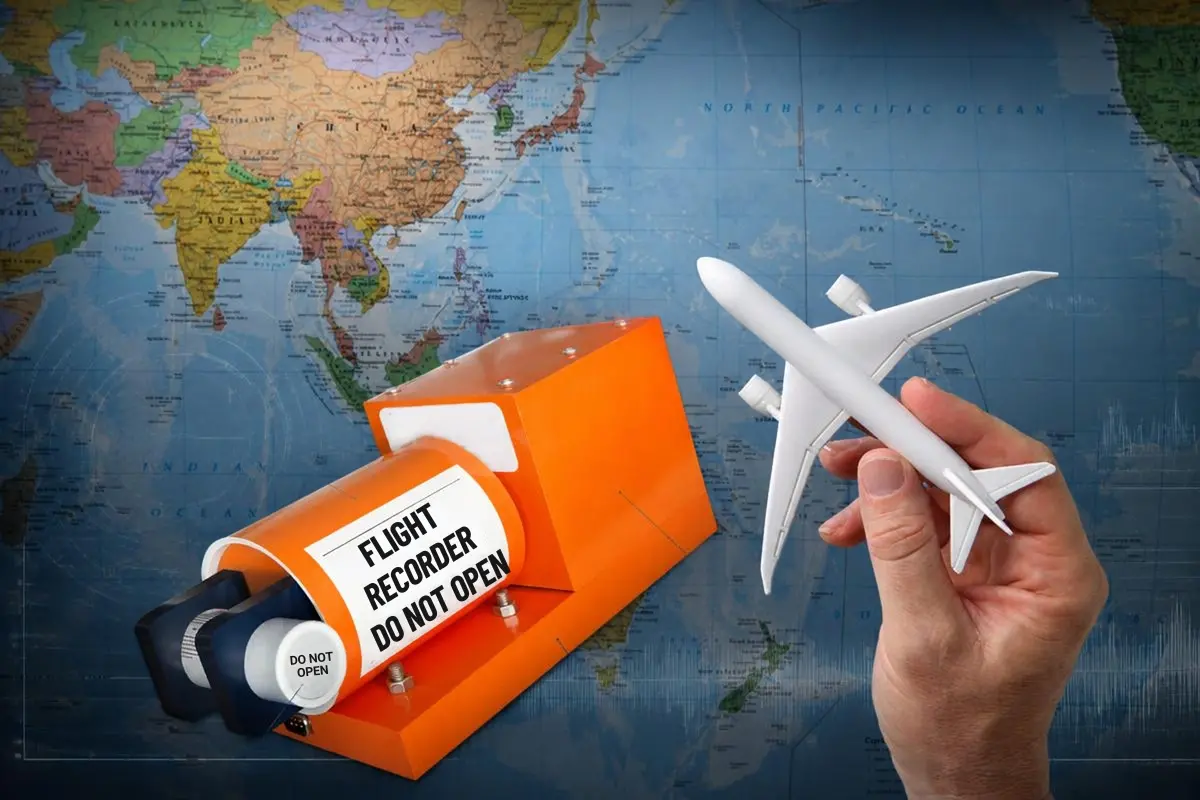
A commercial airliner plunges thousands of feet, a wounded captain somehow gets the cockpit door open, passengers apparently fight their way through a violently gyrating cabin, a plumber takes the controls, two off-duty pilots materialise at precisely the right moment, and the aircraft lands safely. You are not reading the script of a Steven Seagal movie. And even if you were, it sounds so extravagantly implausible that satire has little to do with it, and the script would probably have been returned with a note asking the writer to tone it down. Every government eventually discovers that the public has a surprisingly high tolerance for improbable stories, especially when the alternative is admitting something went spectacularly wrong. But even by that generous standard, the story emerging from flydubai flight FZ1073 requires an unusual suspension of disbelief.
Let us be absolutely clear about one thing. Something serious happened on that aircraft. The plane descended violently, the cockpit became the scene of a physical confrontation, the captain was injured, and the aircraft was diverted to Tabuk. Everyone on board was extraordinarily fortunate to survive, and nothing about that is amusing. What is amusing, at least in the darkest possible sense, is the increasingly polished narrative that has grown around the event before the public has been given the one thing that could settle much of the argument. The black boxes. Two pieces of evidence are particularly important in an aircraft like this. The flight data recorder tells us what the aeroplane was actually doing, and the cockpit voice recorder tells us what was being said and, within the limitations of the recording system, what was happening in the cockpit. Add air traffic control recordings, aircraft system data, crew statements, passenger testimony, and physical evidence, and one should eventually have something more substantial than a story assembled from frightened passengers, official briefings, and political declarations.
Flight tracking data can tell us that an aircraft descended rapidly, but cannot tell us who was manipulating the controls. It cannot tell us whether the autopilot was engaged, what control inputs were made, precisely what happened in the cockpit, or what was said between the pilots. Reuters has explicitly pointed out that the tracking data cannot establish what was happening inside the cockpit and that the flight recorders and other evidence are needed to reconstruct the sequence, and that is where the story becomes rather interesting. We have been told that the co-pilot attacked the captain and attempted to take control of the aircraft. We have also been told that the captain, despite being injured, managed to open the cockpit door; passengers then entered the cockpit, subdued the attacker, and two other flydubai pilots, travelling as passengers, assisted in stabilising the aircraft and ultimately landing it safely. Reports now explain that such pilots can routinely travel as passengers when being repositioned for another assignment. Well, even if you concede that all of that may be true, there is a difference between saying that something is possible and demonstrating that it happened exactly as described. That matters because the aircraft was not apparently cruising peacefully at 34,000 feet while everyone waited patiently for the next act. Flight tracking data indicates a remarkably rapid descent, followed by a climb and another descent before the aircraft stabilised. Reuters reported that the aircraft lost more than 14,000 feet in less than thirty seconds during one part of the sequence. Other reconstructions have described a much larger altitude loss over a longer period. The numbers themselves have already become a small journalistic circus. That's precisely why the black boxes matter. They don't care about television interviews or have political affiliations. They do not have an election to fight, a reputation to protect or a press conference to attend. Their job is to simply record. If the captain opened the cockpit door after being attacked, the CVR and aircraft systems should help establish when that happened. If passengers entered the cockpit, the CVR should capture a sequence of sounds and communications corresponding to the event. If the aircraft was being deliberately forced into a dive, the FDR should provide an extraordinarily detailed account of the aircraft's response and the control inputs. If somebody else subsequently took control, that too should leave a technical footprint. In other words, the aeroplane itself ought to be a considerably better witness than the rest of us. Yet we seem to have developed a peculiar modern habit of demanding that the public believe the narrative first and examine the evidence later. That is like putting the cart before the horse, and it is particularly backwards in aviation, where an entire international discipline exists precisely because engineers and investigators do not settle catastrophic questions by asking which version sounds most persuasive on television. There is another charming detail. Apparently, four pilots were aboard the aircraft, two of them travelling as passengers. The two additional pilots were therefore not conjured from thin air, as some of the early descriptions made it sound. They were apparently repositioning for work. That is fair enough, but their presence is so consequential to the aircraft's survival that the public is entitled to know exactly what role they played. Who entered the cockpit first? Who physically took the controls? Who communicated with air traffic control? Was the captain still capable of flying? Was the co-pilot restrained before or after control of the aircraft was recovered? What aircraft systems were functioning? What altitude and speed did the aircraft reach during the worst of the manoeuvres? These are not conspiracy questions. They are aviation questions, and indeed, asking them is almost insultingly conventional.
The same applies to the rather extraordinary story of the passenger, described as a plumber, who reportedly helped with the controls. He has subsequently become something of an accidental folk hero. Good luck to him; if he helped save the aircraft, he deserves every word of praise he receives. But the fact that a plumber did something heroic does not eliminate the need to determine precisely what he did. Nor does the fortunate presence of two additional pilots. Fortune can produce astonishing events. Aviation has survived innumerable examples of it, but when several extraordinary circumstances are presented in one seamless narrative, the proper response is not necessarily disbelief, but documentation. That is what the black boxes are for.
There is also a larger lesson here about how quickly facts mutate into narratives. On the day of the incident, the airline itself urged people not to speculate and said that the reasons and motives remained unknown and subject to formal investigation. Yet within days, the story had acquired a remarkably complete plot involving a deliberate terrorist attack, a planned attempt to crash the aircraft and a previously radicalised co-pilot. Reuters has since reported that Israeli officials believe the co-pilot planned an attack before joining flydubai and intended to crash the aircraft into the Tel Aviv area. Those are serious allegations, but they are still part of an investigation and not a substitute for one. There is no reason to object to investigators reaching such conclusions if the evidence leads them there. But evidence is precisely the point. If the co-pilot deliberately tried to crash the aircraft, show us what the flight recorder says. If he was fighting the captain for control, show us the sequence. If the captain opened the door while the aircraft was undergoing those extraordinary manoeuvres, establish when and how. If the passengers entered the cockpit and subdued him, reconstruct the event from the recorder, cockpit evidence, communications and testimony. If the official version survives all that scrutiny, it will be considerably more convincing. The public does not need another heroic story. It needs a boring, technical, forensic reconstruction of what happened. Aviation investigators are supposed to be particularly good at producing exactly that. Because one witness in this whole extraordinary episode cannot exaggerate, misremember, speculate, hold a press conference, or appear on television. And that is the black box, and perhaps it is time we let it tell the story. The official account may be entirely correct, or may turn out to be even more extraordinary than the version currently being circulated. It may also turn out that several details have been misunderstood, simplified, or embellished in the rush to produce a satisfying narrative. Any of those outcomes is preferable to what we have now.
Because when an aircraft performs an apparently impossible sequence of manoeuvres, when a cockpit becomes a battleground, when an injured captain opens the door, when passengers become an impromptu security team, when a plumber becomes a pilot and when two off-duty pilots just happen to be sitting in the cabin waiting for their cue, the least unreasonable demand imaginable is that somebody open the box and let the aeroplane speak. After all, if the story is as good as they say it is, the evidence should have no difficulty telling it.