The UAE has an explanation. It still owes us answers.
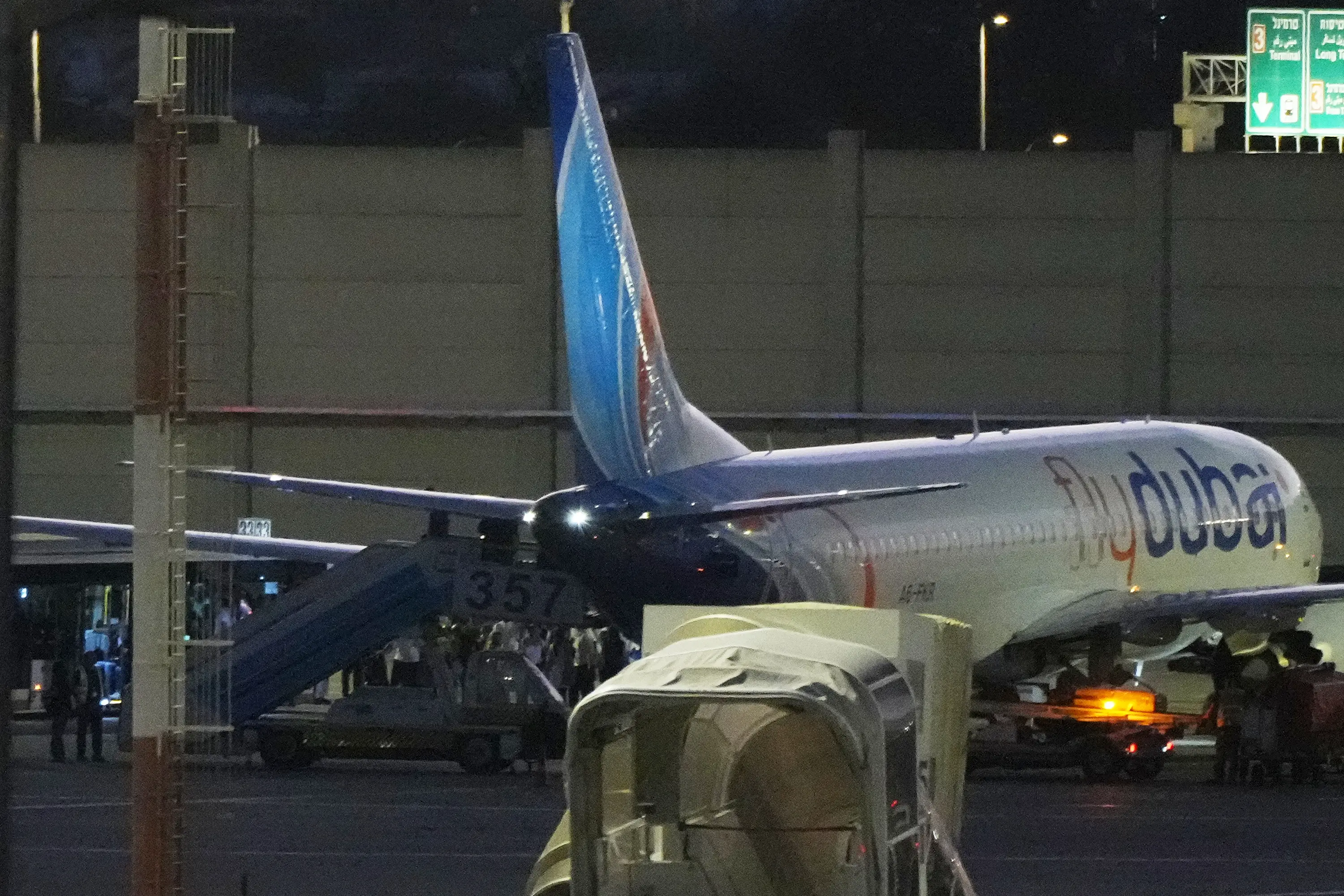
Looks like a rather peculiar art governs aviation security. A man can apparently acquire a pilot’s licence, secure employment with a major airline, fly repeatedly into a country that explicitly bars crew members holding passports from countries with which it has no diplomatic relations, and allegedly plan an attack on the very airport to which he is flying, all while the institutions responsible for preventing such a spectacle assure us that the prescribed checks were completed. The paperwork, it seems, was impeccable. The security requires closer examination.
The UAE Attorney General’s statement of October 9 provides a detailed account of what allegedly happened aboard flydubai flight FZ1073. According to the official version, the Omani co-pilot, Hammam al-Hammami, had cultivated extremist views, used two earlier flights to Tel Aviv to familiarise himself with the route and airport, and attempted to seize the aircraft to crash it into Ben Gurion Airport; reportedly, he confessed to the plot. These are serious allegations, but the more elaborate the account becomes, the more conspicuous another question grows. Who decided that this man was fit to be entrusted with the lives of hundreds of passengers, and on what information was that decision based? The UAE prosecution says he held a pilot’s licence, provided a certificate of good conduct and passed the required recruitment checks. Apparently, none of these checks revealed indications of extremist sympathies or terrorist intentions. There is something almost touching about the confidence with which bureaucratic procedure is invoked to settle a question that bureaucratic procedure was supposed to prevent from arising. The box was ticked, the certificate was filed, the licence was inspected, and the applicant was deemed fit to fly a passenger aircraft into Israel. What could possibly go wrong? Quite a lot, as it turns out. Investigative reporting alleges that Oman Air had previously removed al Hammami from flying duties over concerns about extremist material. The Wall Street Journal has reported that flydubai hired him without contacting Omani authorities to verify his earlier employment history. The precise circumstances require documentary confirmation, but the allegations raise questions that a certificate of good conduct cannot answer.
What did flydubai know about its prospective employee, what did it attempt to find out, and what information did it fail to obtain? If the reports about his earlier grounding are accurate, this is not an incidental administrative detail. It is the centre of the story. A pilot reportedly considered problematic enough to be removed from flying duties in one jurisdiction subsequently obtained employment with a major airline in another, was assigned to an Israel-bound flight and, according to the UAE prosecution, used earlier journeys to study the very route on which he eventually attempted his alleged attack. The security system has apparently managed to place the fox in the cockpit and then express astonishment at the discovery of poultry-related difficulties! flydubai is a Dubai government-owned airline that operates separately from Emirates, although the two carriers have a strategic partnership. It is hardly an obscure operator recruiting pilots out of a telephone directory. The public is entitled to expect that recruitment procedures for people entrusted with hundreds of lives involve rather more than checking whether the applicant has brought the correct paperwork to the interview.
Then there is Israel. Reports indicate that the UAE shared the flight’s passenger and crew manifest, including nationalities, with Israeli authorities before departure. The co-pilot was an Omani national, and Oman has no diplomatic relations with Israel. Yet he reportedly operated earlier flights to Tel Aviv without being stopped. Benjamin Netanyahu has referred to a loophole in the arrangements governing foreign pilots, but the precise legal position remains disputed. Some reports describe restrictions on pilots from countries without diplomatic relations with Israel; other reporting questions whether the bilateral Israel-UAE aviation agreement itself contains such a prohibition. Until the relevant agreements and operating conditions are made public, no one should pretend the legal question has been conclusively settled. That qualification does not make the security question disappear; it just makes it more urgent. If a binding restriction existed, who was responsible for enforcing it? If no such restriction applied to flydubai, why were officials describing the arrangement as a loophole? If Israel received the crew manifest, why was the pilot not flagged? And if flydubai’s recruitment checks were adequate, how did information reportedly available in Oman fail to reach the airline employing him? No institution seems willing to explain its responsibilities. What is missing is a convincing account of how those responsibilities fitted together. Oman, flydubai, the UAE authorities and Israeli security agencies occupied different points in the chain, yet the alleged threat travelled through that chain and arrived with a pilot’s uniform and access to the flight deck. One might almost suspect that every institution was perfectly satisfied with the performance of every other institution until the aircraft began to dive.
Meanwhile, we are invited to marvel at the captain’s courage, the intervention of passengers and the timely presence of additional pilots. They may indeed have performed extraordinary acts of heroism. If the plumber helped save the aircraft, he deserves every compliment he receives. But heroism at the scene of a security failure does not excuse the failure that made heroism necessary. Nor does a successful landing retrospectively transform an inadequate recruitment process into an adequate one. The public also needs the technical evidence. The prosecution’s account of motive and planning is not the same thing as a complete forensic reconstruction of the flight. The flight data recorder and cockpit voice recorder should help establish the sequence of control inputs, aircraft movements and cockpit communications. These need to be correlated with air traffic control recordings, aircraft systems data, witness testimony and physical evidence. As of October 10, the actual recorder data had not been publicly released. Nobody is suggesting that raw cockpit audio must be broadcast to the world while a criminal investigation is under way. But a detailed technical account of the aircraft’s movements and the sequence of events is a reasonable expectation. If the official reconstruction is accurate, the evidence should corroborate it. If details have been misunderstood or embellished, the same evidence should help correct them. The authorities may ultimately establish that al Hammami acted alone and that flydubai’s recruitment checks complied with the rules then in force. They may also discover failures in employment screening, intelligence sharing or the application of aviation security arrangements. While none of these possibilities should be prejudged, the public should not be expected to treat an official statement as a substitute for answers to questions the statement itself leaves open.
The most consequential question is how a man allegedly planning such an attack was able to enter the profession, secure employment, obtain repeated access to Israel-bound flights and remain undetected until the alleged plot was under way. A terrorist’s motive may explain why he attempted an attack, but it does not explain why the systems designed to prevent one failed to identify him. The investigation must therefore establish not only what happened aboard FZ1073, but how the recruitment and clearance process worked, what information each authority had, and whether anyone failed to act on it. The relevant employment records, aviation agreements, crew clearance procedures and black boxes should provide the answers. Another procession of official assurances will not. The presence of a terrorist in a cockpit is a catastrophe narrowly averted. The process that allegedly allowed him to get there is a failure that demands answers. The plumber may have helped save the aircraft, the pilots may have helped bring it safely to the ground, and the black boxes may eventually explain how. But somebody still needs to explain who opened the door to the man who allegedly tried to bring it all down.