World Cup 2026: Why football will ultimately be the real winner
The beautiful game on Earth has perhaps just begun to generate energy and trigger excitement around the globe. That might sound like a strange expression for the ongoing football World Cup, but sometimes the truth can be painful. It is doubtful if at any other time in the history of the World Cup there has been such a touch of uncertainty, disappointment, and the like, as there was this time on the road to the opening of this magnificent spectacle in football. Strangely, it had nothing to do with the sport itself, but rather with factors like geopolitical tensions and strict vigilance on the part of one of the host countries, the USA. But then, the game had to go on, and ever since the ball started rolling with the inaugural match on June 11, the scene has been changing to the familiar cheers and swaying crowds in stadiums all over the three countries—Mexico and Canada being the other two hosts. That is the essence of this beautiful game, which can in time sweep away the ugly early settings to give the sport what is its due!
It was ironic that such a situation should have come about for this edition, which is the first in the World Cup series to feature an expanded field of 48 teams playing 104 matches in all. "More matches, the merrier" is one way of looking at it, but there are observers who believe too much can also be self-defeating, in the sense that there would be a big question mark over sustaining the quality of the contests. FIFA’s view, of course, is to underline the need for a greater global reach for the sport and to provide chances for smaller nations to make it to this showpiece event. But will this not also give rise to lopsided contests in the early phase, sending the wrong signal? Perhaps, in a way, this is true if one were to bring in the experience of Curaçao, the smallest nation in the world, trying to fight the famed Germany, four-time winners of the Cup, in their group opener.
Was it to be a David vs. Goliath story? Many thought so, and indeed a semblance of that came through initially when, after German Felix Nmecha scored in the 6th minute for the fastest goal in this World Cup, Curaçao found the man to equalise! Livano Comenencia did it fifteen minutes later, triggering a kind of celebration worthy of winning a final. For Curaçao, that was history: scoring a goal in the World Cup. It seemed like a dream realised. It is a different matter that Germany came out with a whopping 7-1 win in the end, but for the Curaçauan supporters, that one goal was enough to trigger immense emotion. Why, even their 78-year-old coach, Dick Advocaat, the oldest football manager in this World Cup, believed it was an incredible moment for the country. The blue wave had swept into Texas. How much this match or the goal will inspire these men from the tiny nation, only time will tell, but there was certainly something to look forward to.
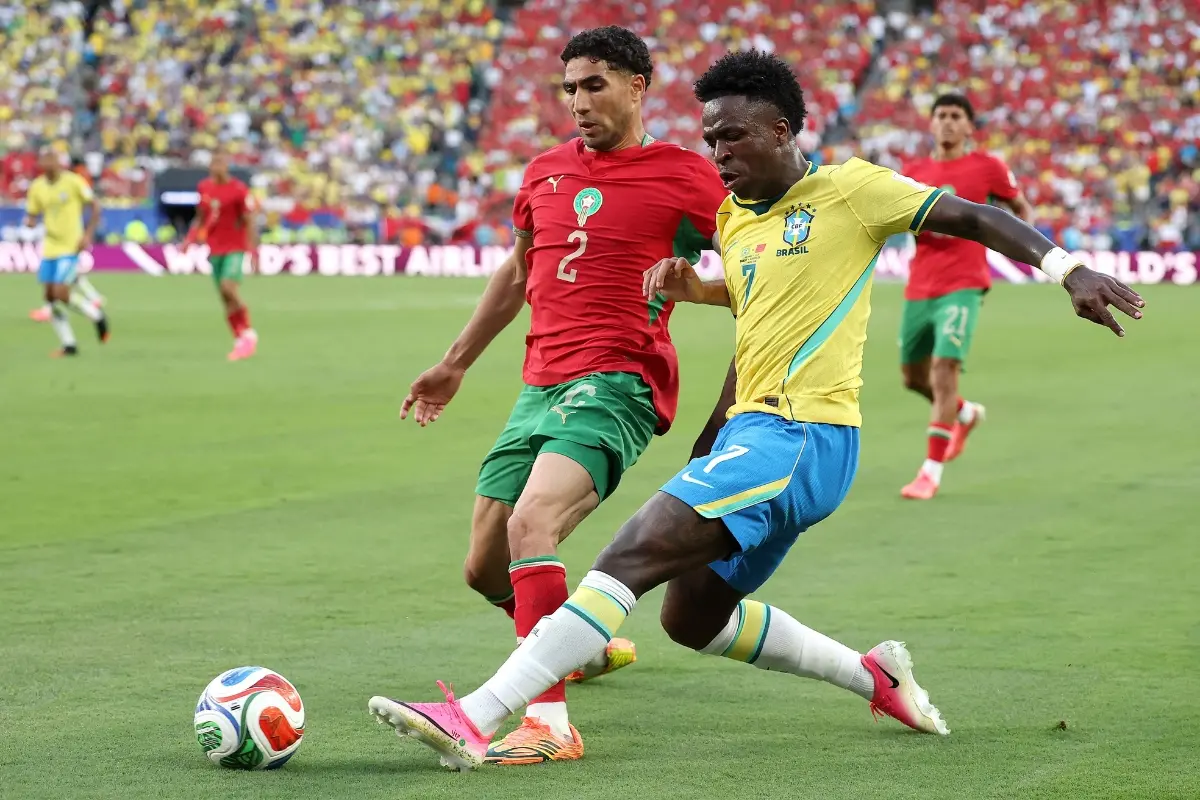
In many ways, the overall feeling was that "caution" played a big role in these initial matches. True, co-host Mexico started with a Mexican wave at the Azteca Stadium when it got past South Africa, while Asia had two representatives willing to keep the hopes of their continent flying high. Korea went past Czechia in what many believed was a strong start. Japan, on the other hand, held the redoubtable Netherlands to a draw. It must be remembered that Japan was the first non-host nation to qualify for this edition, and there are high expectations for the country to make a mark here. Meanwhile, it has not been easy going for another big-timer and five-time Cup winner, Brazil, after the African champions Morocco—semi-finalists on the last occasion—held them to a draw.
Brazil, which last won the Cup in 2002, did not seem like the giant it once was. Of course, these are early days, but their display was unconvincing still, barring the momentary brilliance of Vinícius, which helped Brazil achieve a face-saving finish against the African marauders. The team's Italian coach, veteran Carlo Ancelotti, did not want to read too much into Brazil’s display in this opener. The team would pick up, in his belief, and Brazil had better do that, not just to save the World Cup from sinking further amidst the current goings-on, but to enable a Latin American dream to come true again.
Other big names in the sport, like Spain, France, and holders Argentina, for instance, are still to come into focus at the time of writing. Surely none of them will go all out straight away, considering the journey ahead, which is not just long but climatically a little unfriendly. Preserving energy would be wisdom, but the main interest will be on the underdogs, including the other newcomers. Surely the cheers will pick up—and have picked up—and as the days go by, football will be held in packed stadiums, unlike now, where some matches have been played in front of many blocks of empty seats. A World Cup and not a sell-out crowd seems unthinkable, but ground reality can be striking thanks to the kind of regulations that affected not just the entry of players (read: Iranians), but even a deserving referee. Somali referee Omar Abdulkadir Artan, Africa’s best male referee in 2025 and the first from his country aspiring to officiate in a World Cup, was denied a visa.
Yet, for all this, football will emerge as the winner in the end. It has all these years, and before long, discussions will centre on who will hit the jackpot. Can Lionel Messi add further to his imposing image? Can Cristiano Ronaldo make it memorable for Portugal? Both of these legends are making history by entering their sixth World Cup. There is, therefore, much in store ahead.