Cars that 'talk' to each other? Centre proposes V2V communication rules
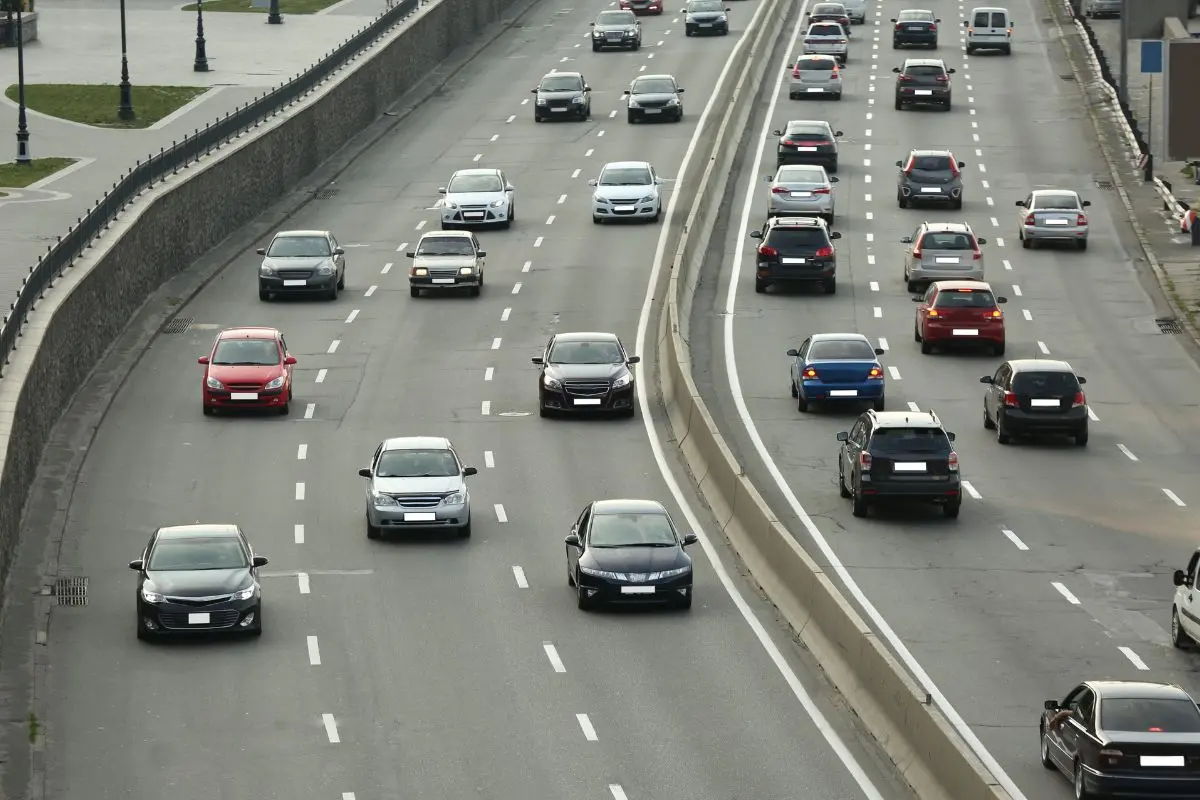
The Ministry of Road Transport and Highways has moved to bring vehicle-to-vehicle (V2V) communication under India's motor vehicle rules, proposing a phased rollout of the technology in all new passenger and commercial vehicles.
What the draft says
In a draft notification, MoRTH has proposed amendments to the Central Motor Vehicles Rules, 1989, to create a regulatory framework for V2V systems in India. The plan ties in with AIS-230, a new technical standard that will govern the minimum performance, safety and cybersecurity requirements for the system.
The draft follows an earlier move by the Department of Telecommunications, which de-licensed the 5.875 GHz to 5.925 GHz band for V2V and other intelligent transport system applications through G.S.R. 466(E) dated June 10, 2026. That spectrum decision removes a key regulatory hurdle for connected-car deployment in India.
How V2V works
V2V communication allows vehicles to exchange real-time data such as speed, position, direction and acceleration with nearby vehicles. That information can warn drivers or onboard systems about sudden braking, collision risk, unsafe lane changes or an approaching emergency vehicle.
Unlike sensor-only safety systems, V2V can “see” beyond a vehicle’s line of sight, making it a complement to ADAS and a building block for connected mobility.
The idea is to shift road safety from reacting to danger to anticipating it.
The rollout timeline
MoRTH has proposed a phased compliance schedule for vehicles of categories L, M and N:
* Vehicles manufactured on or after October 1, 2027 will need to comply with AIS-230 where fitted with V2V systems.
* Vehicles manufactured on or after October 1, 2028 will need to be fitted with V2V communication systems conforming to AIS-230.
The phased approach is intended to give vehicle makers, suppliers and certification bodies time to prepare for full implementation.
What AIS-230 covers
AIS-230 has been developed as the technical foundation for V2V in India. It applies to factory-fitted On-Board Units using Cellular Vehicle-to-Everything (C-V2X) technology in the 5.9 GHz band.
The standard spells out requirements for:
* Radio performance, frequency stability and output power
* Receiver sensitivity and selectivity
* GNSS and positioning
* Electrical and power-supply systems
* Electromagnetic compatibility
* Cybersecurity and communication security
* Road-safety application performance
It also supports phased safety use cases such as:
* Emergency Brake Alert
* Forward Collision Warning
* Wrong-way Driving
* Emergency Vehicle Alert
Why it matters
Government and industry sources say the move is designed to improve situational awareness on Indian roads, where human reaction time and line-of-sight visibility are often not enough to prevent crashes.
The ministry’s Task Force on Intelligent Transportation Systems had already recommended the use of the 5.9 GHz ITS/V2X band for road safety, and the Technical Standing Committee on CMVR approved AIS-230 as the relevant standard at its meeting on May 7, 2026.
If finalised, the framework could accelerate the shift from isolated vehicle safety to connected mobility, where cars and commercial vehicles exchange alerts in real time to reduce accident risk.
The draft rules are now open for comments for 30 days. After that, the ministry will review objections and suggestions before issuing the final notification.
If cleared, India would be one of the larger markets to formally mandate a V2V-ready regulatory structure, giving automakers a clear pathway toward connected-vehicle deployment