Pod of 157 dolphins stranded on remote Australian beach, dozens dead
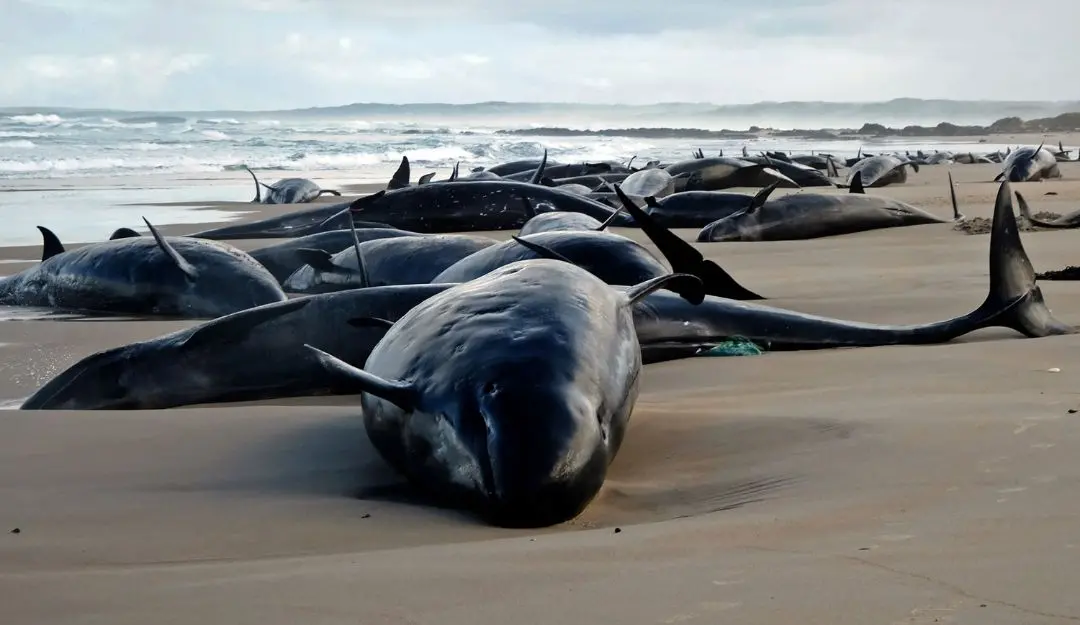
Sydney: A tragic event unfolded in Australia as a pod of 157 dolphins, believed to be a deep-sea species, became stranded on a remote beach in Tasmania, with dozens of the creatures having already died. The incident, which took place in the last 48 hours, has left environment officials working to save the remaining dolphins, with only around 90 still alive as of Wednesday morning.
The stranded dolphins are believed to be false killer whales, a species known for their orca-like skull shape. State wildlife officer Brendon Clark confirmed the difficulty in refloating the survivors, some of which can weigh over one tonne. He stated, "As with any stranding, euthanasia is an option to minimise suffering, and we do have vets on site to help make informed decisions if that is deemed necessary."
This is the first time in 50 years that false killer whales have been found stranded in this part of Tasmania, though pods of this species are not uncommon in Australian waters. Clark noted, "They haven't displayed this type of behaviour in our waters for a long period," and added that the cause of the stranding remains unclear. He hopes post-mortem examinations may provide insight into the situation.
Difficulties in responding
The dolphins were stranded near the Arthur River inlet, a sparsely populated area with a rugged coastline. Tasmania's environment department acknowledged the challenges posed by the inaccessibility of the site, stating, "Stranding response in this area is complex due to the inaccessibility of the site, ocean conditions and the challenges of getting specialist equipment to the remote area."
False killer whales can grow up to 6 metres (20 feet) in length and are highly social animals, often gathering in large pods. They can weigh over one tonne as adults. Despite their mass strandings being known to sometimes wipe out hundreds of animals, little is known about their population size, with the Australian government listing their conservation status as "near threatened."
Agency